
Every April, the streets of Thailand burst into life with the celebration of Thai New Year, also known as Songkran. Recognized by UNESCO as part of humanity’s intangible cultural heritage, Songkran is a festival that carries deep cultural meaning for the Thai people. From playful water fights under the scorching summer sun to family reunions and temple visits, Songkran draws travelers from around the world who come to experience its unique blend of fun and tradition. But what many may not realize is that Songkran doesn’t stop at Thailand’s borders. Today, we take you on a journey across the globe to see how Thai communities bring this beloved tradition to life, wherever they are.
What is Songkran?
Songkran is Thailand’s traditional New Year festival, celebrated every April as a time of renewal, reflection, and joy. While it’s best known today for its lively water fights, Songkran also involves other meaningful traditions such as merit-making at temples and spending time with family, especially paying respect to elders. It’s a celebration that balances fun with spirituality and togetherness. Beyond Thailand, similar New Year water festivals can also be found across the region, including in Laos, Myanmar, Cambodia, and even Xishuangbanna in Southern China.
Now let’s take a look at some examples of how Thai communities celebrate Songkran across the world.
The United States
With one of the largest Thai diasporas in the world, the United States has become a vibrant second home for Songkran celebrations, popping up across cities and towns where Thai people reside. The festival brings together both Thai locals and curious visitors for a taste of Thailand. In many places, such as Wat Thai Washington, D.C. and Wat Thai in Los Angeles, temples function as cultural hubs where people go to make merit, see cultural performances, enjoy beloved Thai dishes, splash water at each other, and reconnect with a sense of home.
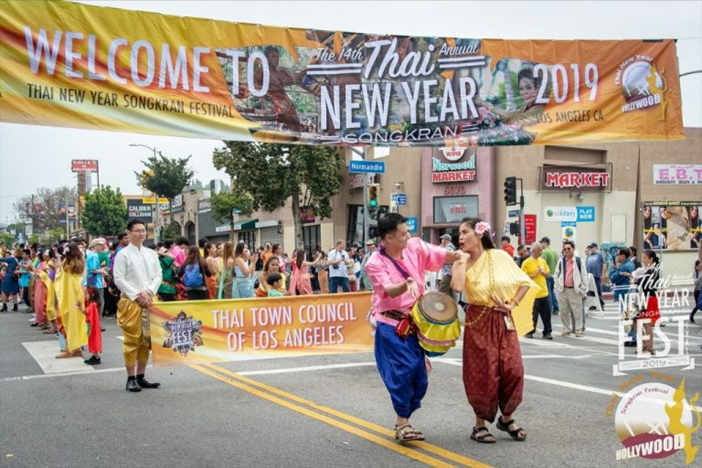
Photo Credit : thainewyear.us
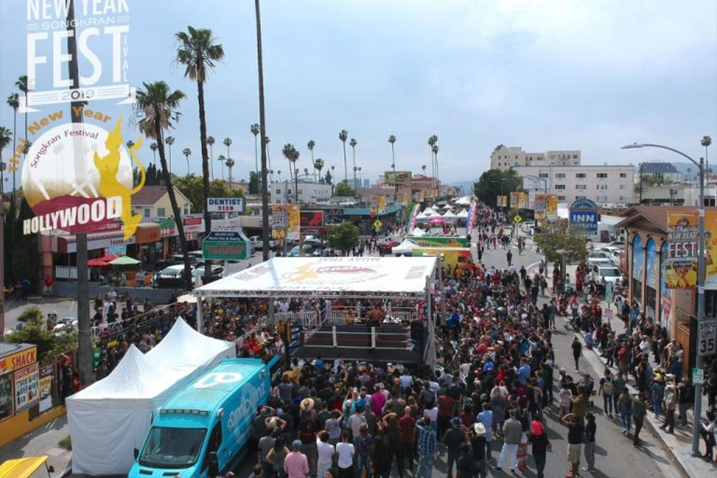
Photo Credit : thainewyear.us
Australia
In Australia, Songkran is celebrated across Thai communities in cities like Sydney, Melbourne, and Brisbane, where the festival brings together locals, Thai expats, and multicultural crowds alike. Often centered around temples and community spaces, these celebrations recreate the warmth of home through a mix of water activities, merit-making rituals, and lively cultural showcases. Visitors can enjoy everything from traditional Thai dance and music performances to bustling food stalls serving classic dishes, while families gather to pay respects and reconnect. Even far from Thailand, Songkran in Australia remains a joyful expression of community, culture, and shared identity.
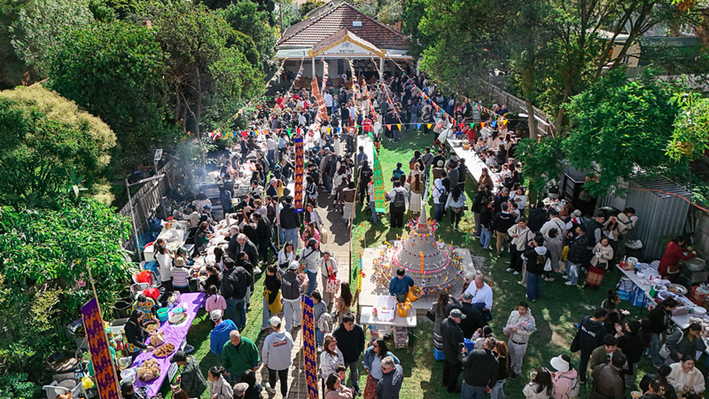
Photo Credit : watthaimelbourne.com.au
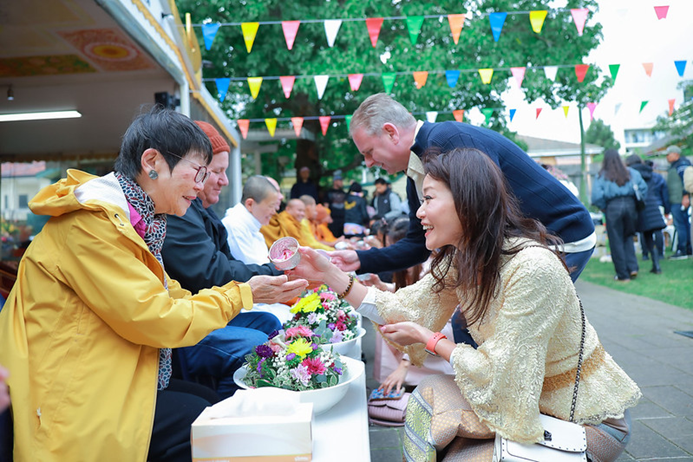
Photo Credit : watthaimelbourne.com.au
Hong Kong
In Hong Kong, Songkran comes alive most vividly in Kowloon City, home to a long-established Thai community and often dubbed “Little Thailand.” Each year, the area transforms into a bustling street festival where a famous Songkran water fights takes over, drawing huge crowds of both locals and tourists. But beyond the splashing fun, the celebration is a full cultural showcase, featuring Thai food stalls, Muay Thai demonstrations, live concerts by Thai artists, and traditional performances that bring a slice of Thailand to the heart of Hong Kong.
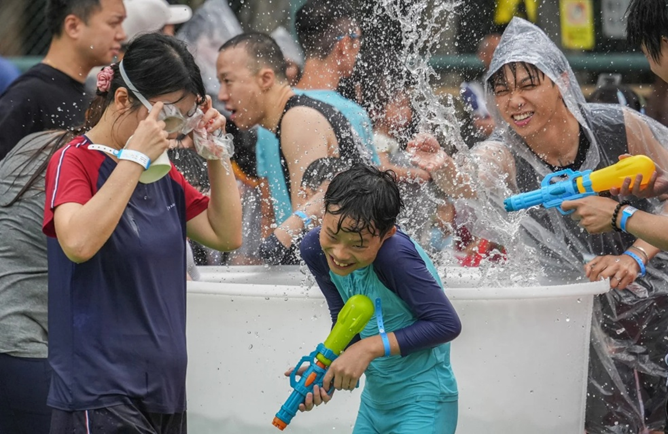
Photo Credit : Eugene Lee from South China Morning Post
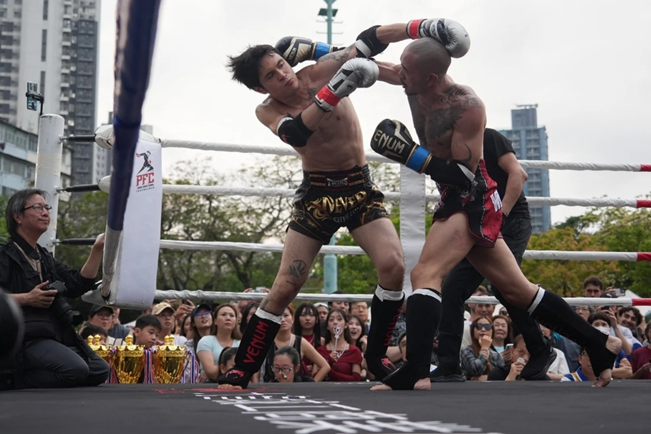
Photo Credit : Eugene Lee from South China Morning Post
Japan
In Japan, Songkran takes on a unique and charming twist at the Beppu Songkran Festival, held as part of the famous Beppu Hatto Onsen Matsuri. Here, the spirit of Thailand’s New Year blends seamlessly with Japanese culture, most notably through its signature “onsen water splashing,” where participants playfully splash each other with warm hot spring water instead of the usual cold water. Set against the backdrop of Beppu’s renowned hot spring town, the festival is a lively fusion of cultures, featuring Thai food stalls, traditional dance performances, and colorful Japanese-style parades. It’s a perfect example of how Songkran adapts to local contexts while still preserving its joyful, communal essence.
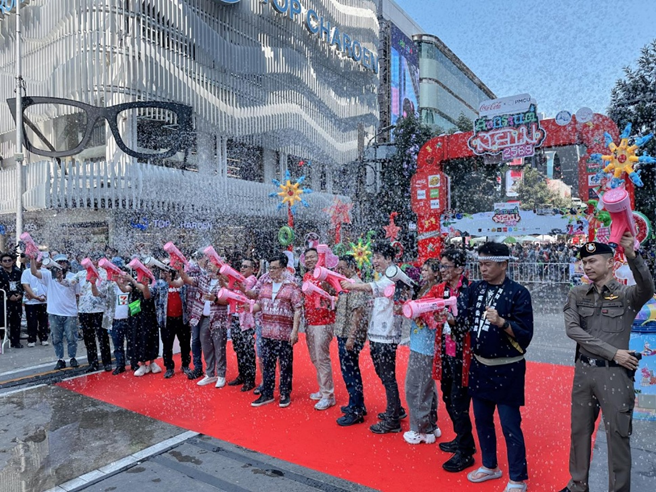
Photo Credit : Facebook Page “Sugoi Japan”
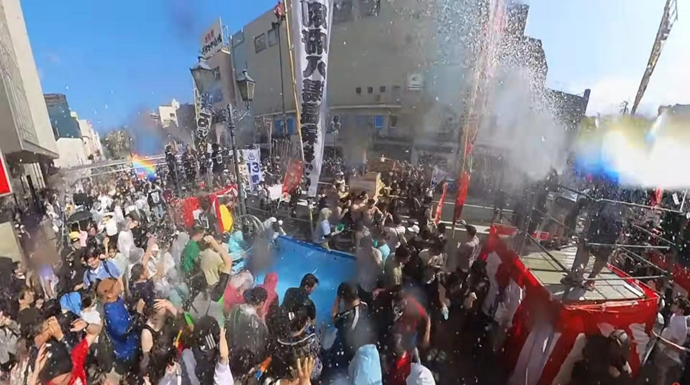
Photo Credit : Facebook Page “Sugoi Japan”
Ultimately, the above examples are only when they’re stated to be: examples. There are countless other global Thai communities practicing Songkran in their own rendition, welcoming both community members and curious locals.
Across Regions – Same Characteristics
Songkran celebrations may look a little different in each place. Yet, its heart remains the same. The most iconic image of Songkran is, of course, the water fight. Streets turn into joyful playgrounds as people splash one another with buckets and water guns, creating a festive atmosphere that reflects the fun-loving and welcoming nature of Thai people. But beyond the excitement, water carries a deeper meaning. It symbolizes cleansing, washing away misfortune from the past year and welcoming a new beginning.
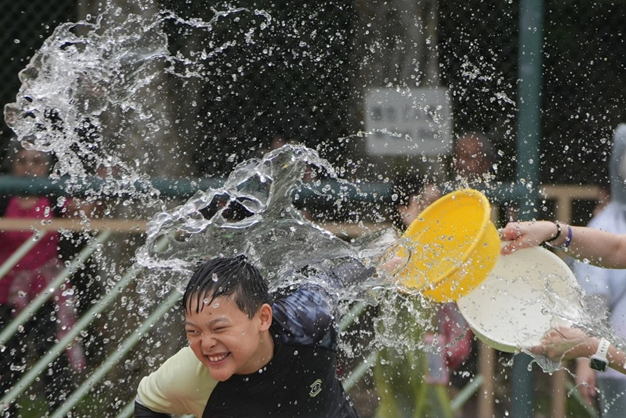
Photo Credit : Eugene Lee from South China Morning Post
Food is another essential part of Songkran celebrations. No Thai gathering feels complete without it, and Songkran is no exception. Whether it’s street food stalls at large festivals or home-cooked meals shared among family and friends or offerings to monks, food brings people together. It’s a way of expressing care, hospitality, and joy, offering a taste of home even for Thai communities living abroad.
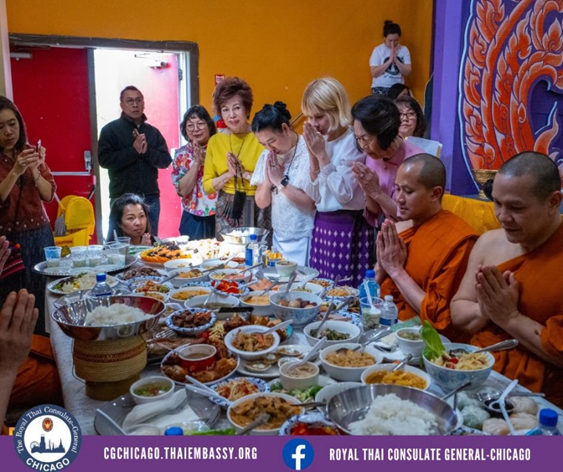
Photo Credir : Royal Thai Consulate-General, Chicago
Temples play a central role in Songkran, both at home and abroad. They serve not only as places of worship but also as cultural anchors where people gather to make merit, offer food to monks, and take part in traditional rituals like pouring water over Buddha statues. These acts of devotion emphasize the spiritual side of the festival, reminding everyone that Songkran is as much about reflection and gratitude as it is about celebration.
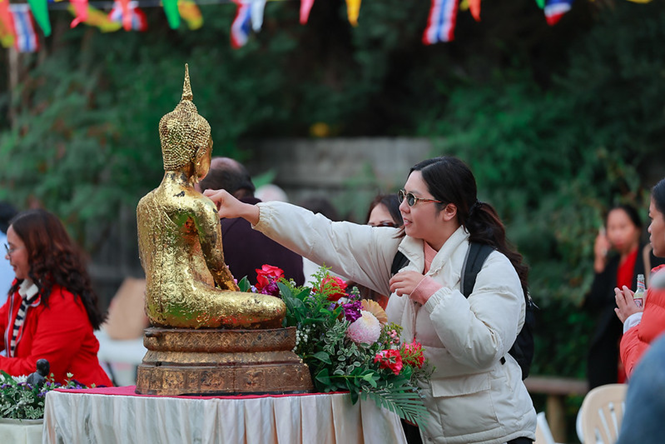
Photo Credit : watthaimelbourne.com.au
Above all, Songkran is about community and identity. It strengthens social bonds, bringing together families, friends, and even strangers in a shared moment of joy. For Thai people living abroad, especially younger generations, it becomes a meaningful way to reconnect with their roots through cultural activities like traditional dress, dance, and music. In this way, Songkran is not just a festival, but a living expression of Thai culture proudly carried across the world.
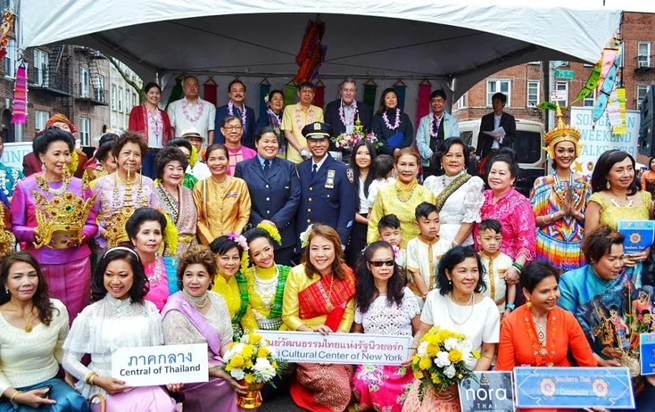
Photo Credit : Queens Daily Eagle
Conclusion
From bustling streets in Bangkok to temples in the United States and lively corners of Kowloon City, Songkran has truly become an international phenomenon. Carried across borders by Thai communities, the festival continues to flourish in new environments while holding onto its core spirit: joy, respect, and togetherness. Wherever it is celebrated, Songkran becomes more than just an event; it is a vibrant expression of Thai identity, a cultural bridge connecting people across the world. In every splash of water, shared meal, and moment of celebration, the Thai spirit lives on, proving that no matter where they go, Thai communities bring a piece of home with them.
So, when April comes around, reach out the local Thai community near you. Wherever you are in the world, the Thai people are ready to welcome you with open arms and a taste of Thailand!
The story of Songkran is a part of Thai culture and heritage that extends across Thailand’s borders. Thai diaspora communities carry on this iconic celebration, passing on values of family, joy, and spiritual rejuvenation to the new generation. Join us in exploring more stories of Thailand as we take you on a journey to discover Thainess through everyday objects and traditions.
Sources :
- https://abc7.com/post/2026-songkran-festival-thai-new-year-celebration-san-fernando-valley-wat-temple/18856985/
- https://mgronline.com/entertainment/detail/9690000035570
- https://www.nationthailand.com/life/travel/40064820
Writer: Tayud Mongkolrat
* This article was written with the help of AI.