


In the first part of this series, we introduced the world of Thai ceramics by exploring their raw materials, techniques, and broad classifications. In this second part, we journey further back, into prehistory and the formative early states of Thailand, to uncover how ceramics first emerged and developed as both everyday necessities and cultural expressions.
Prehistory of Thai Ceramics
The origins of Thai ceramics can be traced back over 3,500 years to the Late Neolithic period, marking the beginning of a rich and enduring ceramic tradition in the region. One of the most significant archaeological sites from this era is Ban Kao, located in Chorakhe Phueak Subdistrict, Mueang District, Kanchanaburi Province.
The ceramic artifacts uncovered at Ban Kao indicate an advanced prehistoric culture with well-developed knowledge of pottery-making long before the emergence of historical kingdoms. The pottery found at this site consists primarily of hand-formed earthenware created without the use of a potter’s wheel, displaying a variety of forms broadly classified into two groups: vessels with permanent supports, such as jars or containers with flat bases, and vessels without permanent supports, often featuring rounded bottoms intended for suspension or nestling into the earth.
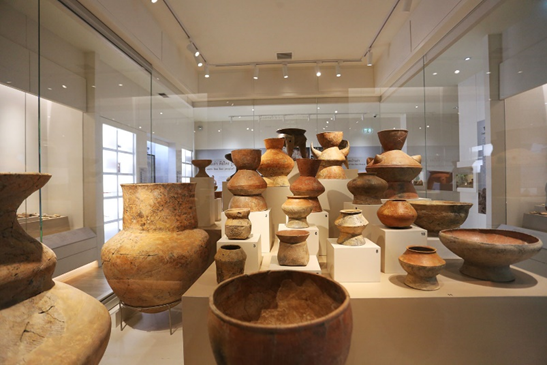
Photo Credit : bangkokpost.com
A unique and defining feature of Ban Kao ceramics is their black polished pottery, characterized by a glossy, burnished surface achieved through meticulous finishing techniques. Another notable form is the tripod vessel, supported by three short legs, which appears to have served both practical and ritual purposes. Beyond pottery, the Ban Kao site has yielded a diverse array of artifacts, including storage jars, cooking pots, clay and stone beads, terracotta figurines likely used in ritual or symbolic contexts, and burial goods that suggest a complex belief system and social structure.
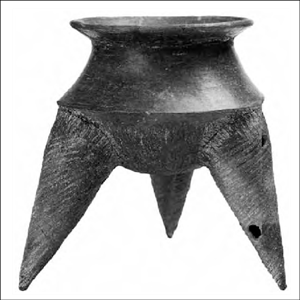
Photo Credit : researchgate.net
These findings indicate that ceramics in prehistoric Thai society were used not only for domestic functions but also held significant ceremonial and symbolic roles. In addition to Ban Kao, other major prehistoric sites such as Ban Chiang in Udon Thani Province, now a UNESCO World Heritage Site, have greatly contributed to the understanding of early Thai ceramics. Ban Chiang pottery is renowned for its distinct red-painted spiral and geometric patterns, reflecting a sophisticated Neolithic and early Bronze Age ceramic tradition characterized by thin, finely made bodies.
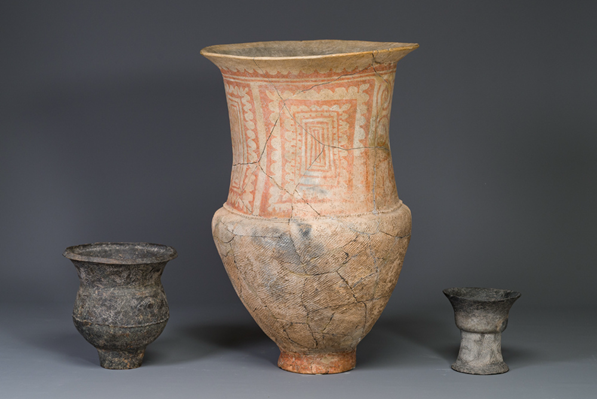
Photo Credit : rm-auctions.com
Together, the ceramic traditions of Ban Kao and Ban Chiang demonstrate remarkable stylistic diversity influenced by local resources and evolving cultural practices, revealing the depth and range of early ceramic developments in what is now Thailand.
Dvaravati Ceramics
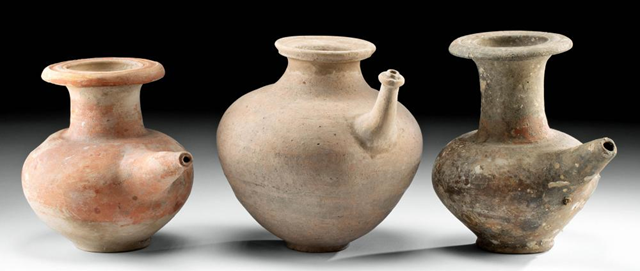
Photo Credit : invaluable.com
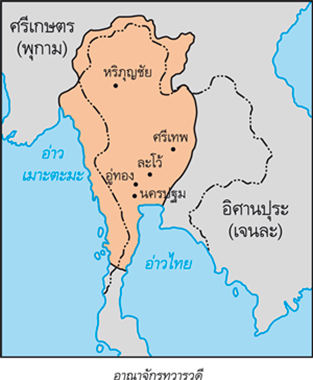
The Dvaravati period, which flourished between the 6th and 11th centuries CE (Buddhist centuries 12–16), marks one of the earliest phases of organized civilization in central Thailand. This era was characterized by a group of city-states or polities located in the lower Chao Phraya River basin, and it was strongly influenced by Indian cultural and artistic traditions, particularly those of the Gupta and post-Gupta periods. Major centers of Dvaravati culture included Nakhon Pathom (also known as Nakhon Chaisi), Lavo (modern Lopburi), Ku Bua in Ratchaburi, Si Mahosot in Prachinburi, Si Thep, Chan Sen, and Ayodhya. Archaeological excavations in these sites have uncovered a wealth of religious structures and artifacts that collectively define what is now recognized as Dvaravati art and material culture, with Buddhist and Hindu iconography reflecting the deep influence of Indian religious traditions.
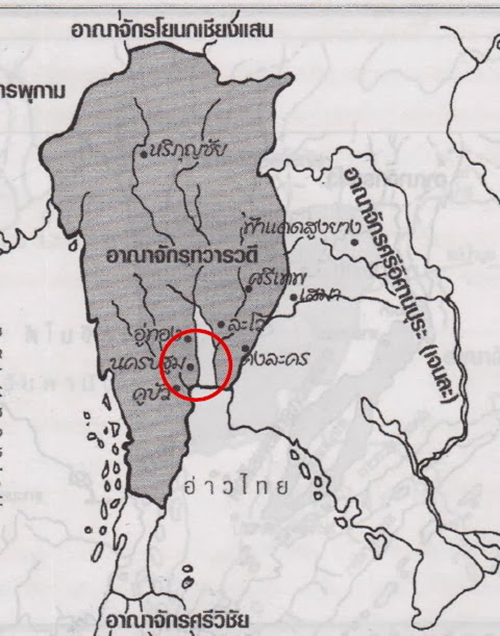
Credit: thainationhistory.blogspot.com
Dvaravati ceramics can be broadly categorized into utilitarian wares for daily life and ceremonial or religious wares. Utilitarian ceramics consisted of thick, unglazed earthenware objects commonly used in domestic settings, such as round-based or ridged cooking pots, spouted vessels, bowls, lidded jars known as hai, and lamps or takhan. These pieces were generally hand-formed on human-powered or manually spun potter’s wheels and fired in open kilns at relatively low temperatures below 1100°C, reflecting early ceramic firing techniques. Ceremonial and religious wares included pedestal dishes, water jugs known as nam ton, wide-mouthed jars, and decorated ritual bowls, often featuring fine ornamentation and serving specific symbolic functions in religious contexts. Additionally, ceramics played a significant role in religious architecture, as evidenced by the production of roof tiles, ridge-end ornaments, miniature stupas, decorative terracotta panels, and votive objects such as Buddha images, amulets (phra phim), and clay figurines of Hindu deities.
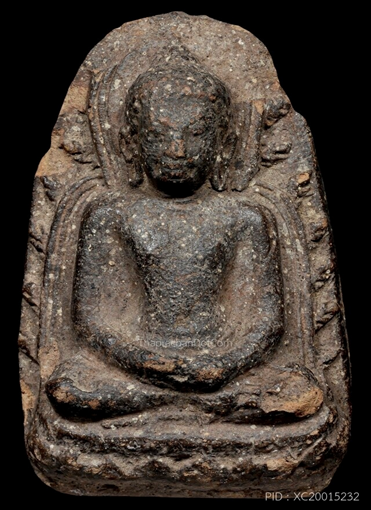
Credit: thaprachan.com
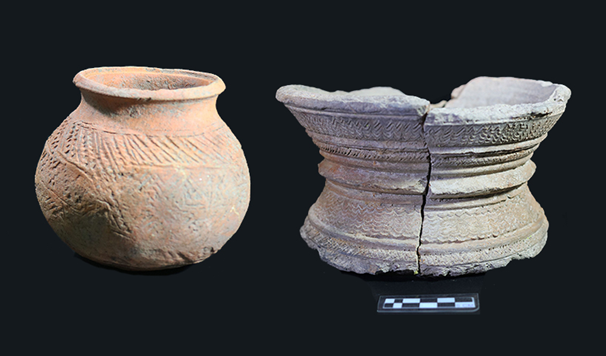
Credit: finearts.go.th
Decoration techniques during the Dvaravati period were diverse, including incising and impressing lines, geometric shapes, and patterns into clay surfaces, burnishing and applying slip coatings to smooth or brighten surfaces, and stamping imagery in the form of rectangular medallions depicting human figures, animals, floral motifs, and religious symbols associated with Buddhism and Hinduism. In some cases, painted decoration was added to enhance visual appeal. The motifs used in Dvaravati ceramics reflect a combination of local traditions and foreign influences, with prehistoric patterns like cord-marking and incision persisting alongside narrative stamps and figurative art inspired by Indian styles, particularly those of the Gupta era.
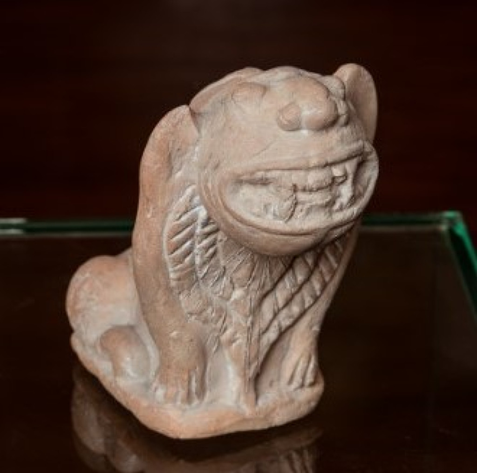
Credit: culturio.sac.or.th
Overall, Dvaravati ceramics provide critical insights into the everyday life, religious practices, and international influences of early Thai civilization. Although technologically modest compared to later traditions, these ceramics reveal a society rich in artistic imagination, spiritual expression, and cultural hybridity, laying the groundwork for the more advanced ceramic traditions that would emerge in Thailand’s subsequent historical periods.
Hariphunchai Ceramics
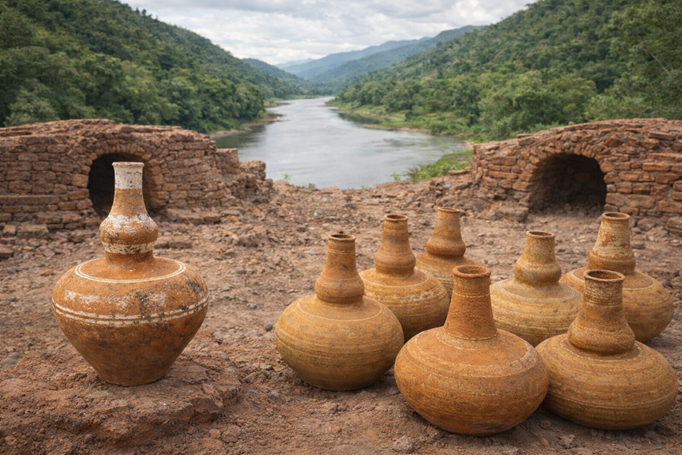
Photo Credit: Envisioned by Artificial Intelligence
The Hariphunchai period marks a distinctive phase in the history of Thai ceramics, showcasing a unique blend of regional identity, Dvaravati influences, and early developments in both religious and utilitarian pottery. Flourishing between the 9th and 15th centuries CE (Buddhist centuries 13–19), the Hariphunchai civilization represented one of the earliest organized polities in Northern Thailand, with its capital at Hariphunchai—modern-day Lamphun.
Credit: trueplookpanya.com
During this time, the kingdom experienced a cultural and religious renaissance that was heavily influenced by earlier Dvaravati traditions while simultaneously developing its own distinctive artistic style. Ceramic production was concentrated along the upper Ping River basin, with two significant kiln sites identified by Thailand’s Fine Arts Department at Ban Wang Hai in Wiang Yong Subdistrict and Ban Sri Yoi in Tong Thong Subdistrict, both located in Mueang District, Lamphun Province. These sites have yielded a variety of ceramic artifacts that provide valuable insight into the material culture and ceramic technology of the Hariphunchai kingdom.
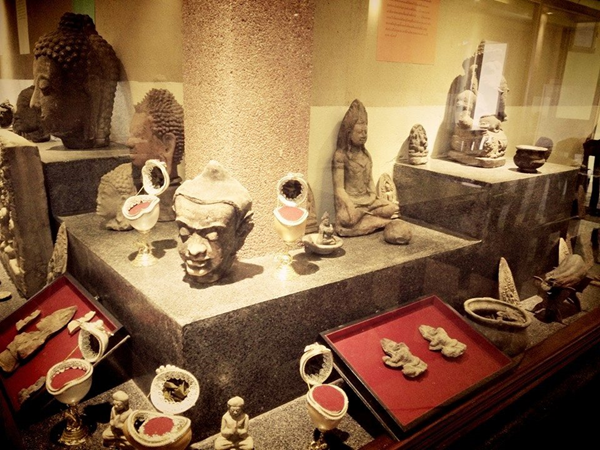
Hariphunchai ceramics were predominantly low-fired earthenware, similar to those of the broader Dvaravati tradition, with kilns that were rudimentary and lacked controlled firing temperatures, resulting in variations in texture and coloration. Despite these limitations, Hariphunchai pottery exhibits a remarkable degree of artistic sophistication and spiritual symbolism. One of its most distinctive contributions lies in religious art, producing molded clay Buddha images, votive tablets known as phra phim, Hindu deity figurines, and decorative elements for stupas and religious structures. These pieces were typically created using clay molds and fired in large batches, with iconography that reflects both Buddhist and Hindu traditions, pointing to a syncretic religious landscape.
Credit: db.sac.or.th
In terms of utilitarian and domestic wares, Hariphunchai pottery can be divided into two stylistic categories. The first includes simple, painted wares—modest vessels often decorated with red painted lines around the neck or shoulder, such as storage jars, offering trays (phan), and oil lamps (takhan), resembling Central Thai Dvaravati pottery and indicating cultural continuity and exchange. The second category consists of elaborately decorated wares, including complex forms such as urns or bone containers with multi-tiered rims, segmented bodies, and decorative motifs, showing stylistic similarities with ceramics from Beikthano, an ancient Pyu city in present-day Myanmar, suggesting regional interaction and shared religious practices. Despite these external influences, Hariphunchai pottery developed its own distinctive style over time, combining functionality with symbolic ornamentation and localized design elements.
Overall, Hariphunchai ceramics stand as a testament to the early cultural identity of Northern Thailand, reflecting a society deeply rooted in religion with strong artistic connections to Dvaravati traditions and neighboring civilizations. From simple painted jars to intricate religious figurines, Hariphunchai pottery reveals the evolving aesthetic sensibilities and technological capabilities of a kingdom that bridged Central Thai influence with Northern innovation.
Srivijaya Ceramics in Thailand
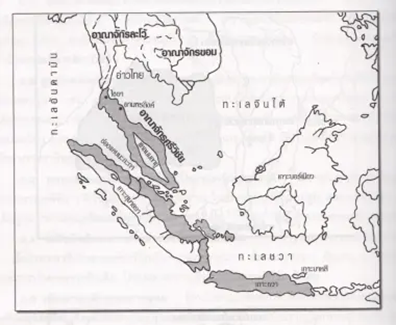
The Srivijaya period marks a fascinating chapter in the history of Thai ceramics, particularly in the Southern regions influenced by this powerful maritime empire. Flourishing between the 7th and 13th centuries CE (Buddhist centuries 13–18), the Srivijaya Empire extended its political and cultural influence across the Indonesian islands, Malay Peninsula, and into Southern Thailand.
Credit: 12171.school.blog
As a center of trade, religion, and culture, Srivijaya shaped the art and material culture of the areas under its sphere, and ceramics produced during this era reflect a vibrant blend of local craftsmanship, foreign influence, and evolving technological capabilities.
Credit : hatyaifocus.com
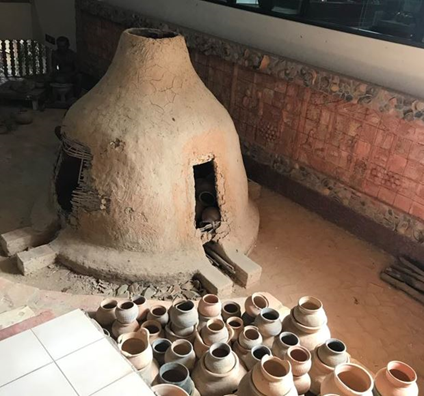
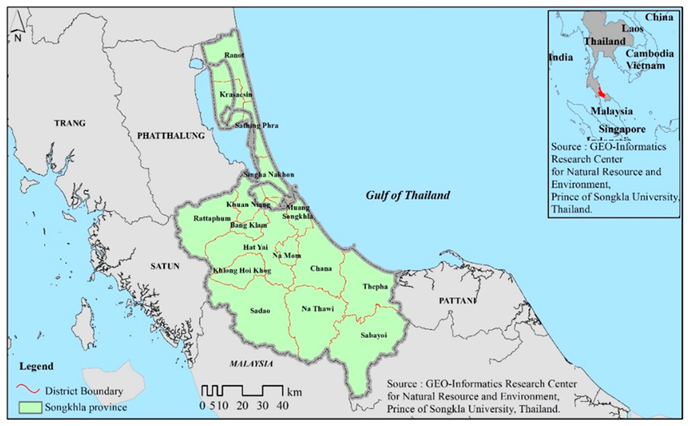
In Thailand, Srivijaya-style ceramics are primarily associated with southern provinces, with significant archaeological evidence uncovered at sites such as Ban Pha-o in Singhanakhon District, Songkhla Province—a major kiln site excavated by the Fine Arts Department—as well as in Sathing Phra and Ranot Districts in Songkhla, Mueang District in Nakhon Si Thammarat, and Chaiya District in Surat Thani. The widespread discovery of Srivijaya ceramics at these locations, and even as far afield as Indonesia and the Philippines, indicates both active regional production and extensive maritime trade networks.
Credit: researchgate.net
Srivijaya-period ceramics in Southern Thailand can be divided into two major groups based on material, form, and function. The first group consists of coarse earthenware for domestic use, including utilitarian vessels made from coarse clay such as low and high-footed plates, bowls, offering trays (phan), and round-bottomed or flat-based pots. These pieces were generally wheel-thrown, thick-walled, and unglazed, with decoration achieved through incised patterns, carved lines, applied reliefs, grooved or combed designs, and in some examples, painted red motifs on a cream background. These wares reflect continuity with earlier Dvaravati ceramic traditions, particularly in form and decoration.
Credit: saranukromthai.or.th
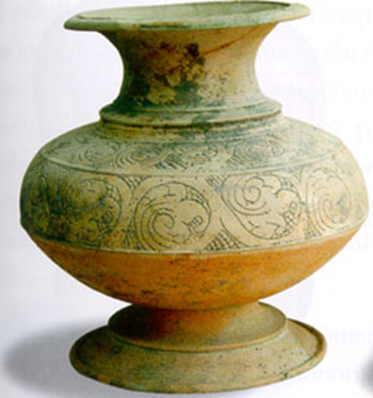
The second group includes fine earthenware for ritual and special use, consisting of more refined vessels made from fine clay with elegant, well-balanced shapes. Common features include rounded bodies, tall narrow necks with flared mouths, high or low pedestal bases, and spouts attached to the body, sometimes molded in the shape of animal heads. The clay body ranges in color from red and gray to yellow and, in some cases, distinctive white, with vessels typically slip-coated but unglazed, demonstrating enhanced clay refinement and shaping techniques compared to earlier periods. These finer vessels were likely used in ceremonial or religious contexts and may have been traded as high-value goods.
Credit: smarthistory.org
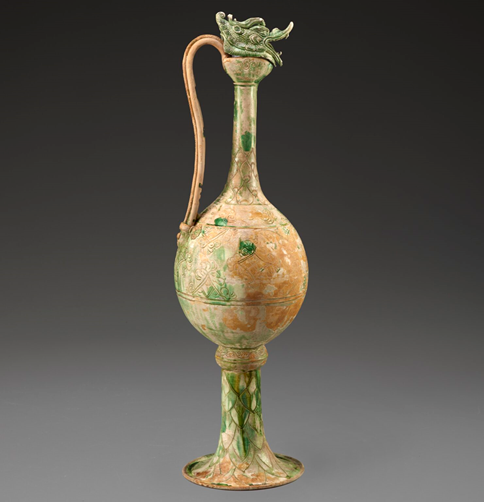
Technologically, early Srivijaya-period ceramics in Thailand relied on traditional low-fired, hand-molded earthenware with minimal temperature control. However, contact with India, China, and other regions introduced new techniques and ceramic types, with the arrival of Chinese high-fired glazed ceramics through maritime trade influencing local tastes and inspiring technological experimentation. The Ban Pha-o kiln site has yielded a wide array of both utilitarian and ceremonial ceramics, suggesting a thriving local industry with advanced shaping techniques and regional distribution networks. Artifacts from Ban Pha-o have been found not only throughout Southern Thailand, including Songkhla, Nakhon Si Thammarat, and Surat Thani provinces, but also in Indonesia and the Philippines, indicating that ceramic production during the Srivijaya period was embedded in international trade routes connecting Southeast Asia’s coastal communities.
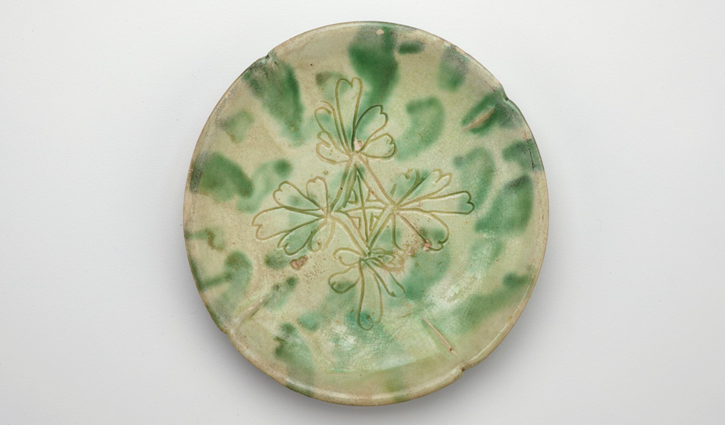
Credit: smarthistory.org
Overall, Thai ceramics during the Srivijaya period illustrate a dynamic intersection of local craftsmanship and transregional influence. Produced within a context of growing maritime trade and cultural exchange, these ceramics reflect both continuity with earlier traditions and the adoption of new forms and technologies. As both household items and ritual vessels, Srivijaya-period ceramics remain vital to understanding the cultural and commercial landscape of early southern Thailand.
Ancient Khmer Ceramics in Thailand
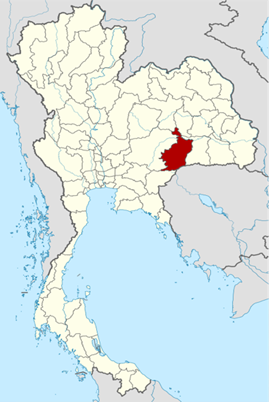
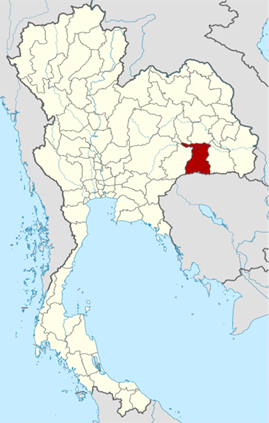
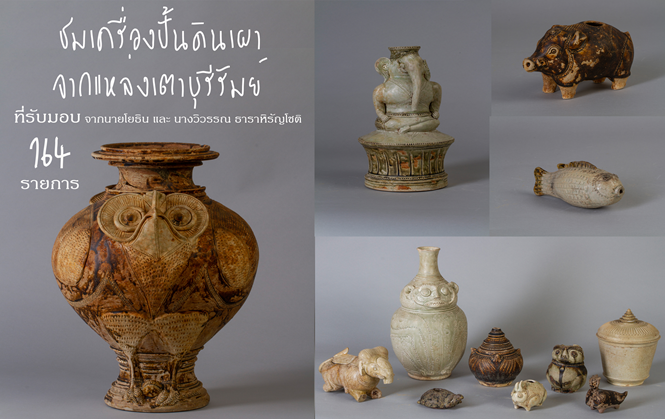
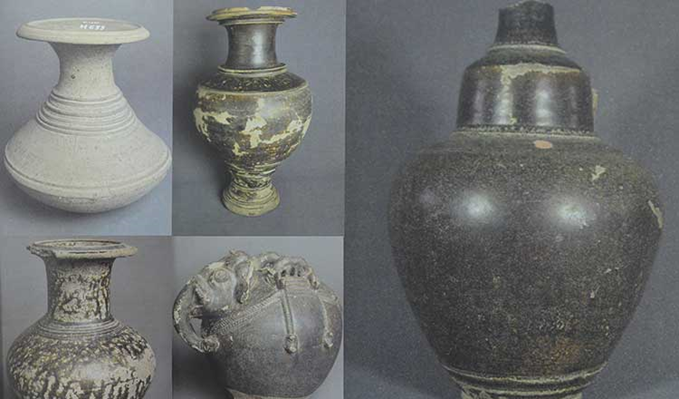
The legacy of the ancient Khmer Empire had an important in parts of what is now modern Thailand, especially the Northeastern region, where archaeological evidence reveals a sophisticated tradition of ceramic production that flourished under Khmer influence. Beginning around the 12th century CE (Buddhist century 16), during the height of the Khmer Empire’s power in Southeast Asia, Khmer ceramic traditions spread into the Lower Northeastern areas of Thailand, continuing until approximately the late 14th century CE (Buddhist century 18) as Khmer power gradually declined.
Credit: wikipedia.org
Credit: wikipedia.org
Ceramic kiln sites from this period have been discovered across Buriram and Surin provinces, with important production centers identified in Lahan Sai, Ban Kruat, Prakhon Chai, Nong Ki, Lampang Mat, and Mueang Districts in Buriram, as well as Ban Suai in Surin Province. These sites represent a regional network of ceramic production that supported both local consumption and potentially trade with surrounding regions.
Ceramic kiln sites from this period have been discovered across Buriram and Surin provinces, with important production centers identified in Lahan Sai, Ban Kruat, Prakhon Chai, Nong Ki, Lampang Mat, and Mueang Districts in Buriram, as well as Ban Suai in Surin Province. These sites represent a regional network of ceramic production that supported both local consumption and potentially trade with surrounding regions.
Credit: finearts.go.th
Credit: khmertimeskh
The kilns used for firing these ceramics were typically long, curved tunnel kilns known locally as “kub kilns,” constructed in an elongated egg shape approximately 1.5 meters wide and 15 meters long. Built using a bamboo frame overlaid with compacted clay layers to form a durable firing chamber, these kilns enabled efficient, high-temperature firings and mass production of glazed ceramics.
Overall, the ancient Khmer ceramics found in Thailand’s northeastern provinces represent a rich and often overlooked aspect of Southeast Asia’s shared cultural history. Shaped by Khmer aesthetics and technologies yet adapted to local materials and forms, these artifacts stand as a testament to the cross-border reach of the Khmer Empire, offering scholars and visitors valuable insights into the everyday lives, beliefs, and artistic achievements of a vibrant and interconnected past.
Conclusion
From the black polished pottery of Ban Kao to the narrative relief jars of the Khmer civilization, the prehistoric and early-state ceramics of Thailand reveal a story of innovation, cultural exchange, and artistic expression. These ceramics were not just practical vessels but carriers of ritual, trade, and identity.
Now that we’ve seen how ceramics evolved from Neolithic communities to early societies, join us in the third part of this series as we explore the rise of classical Thai ceramics, particularly the famed kilns of Sukhothai, Si Satchanalai, and Lanna, whose wares gained renown across Asia.
Sources
- Khreuang Pan Dinphao [Pottery]. 2011. Bangkok: Khati Publishing.
- OpenAI. (2023). ChatGPT (Mar 14 version) [Large language model]. https://chat.openai.com/chat
Author: Viphawan Benniman
Editor: Tayud Mongkolrat