

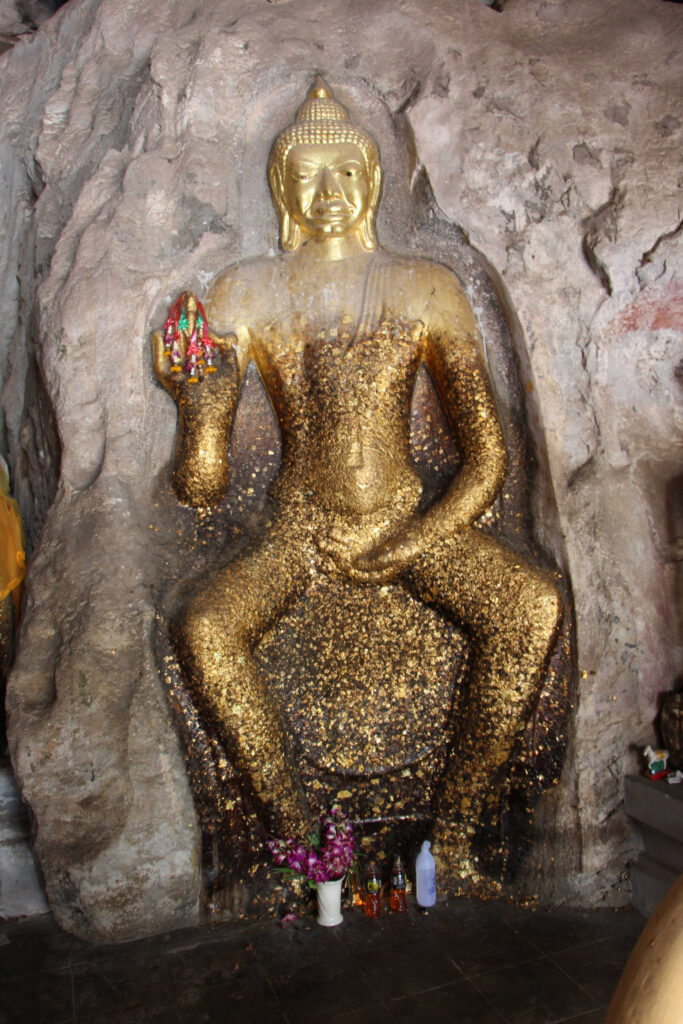
(Photo credit: Princess Maha Chakri Sirindhorn Anthropology Centre)
This pioneering article presents the first in-depth catalog of Bhadrāsana (pendant-legged) Buddha images found in Thailand from the 7th to 9th centuries. Nicolas Revire examines images across a wide range of media, including cave reliefs, clay tablets, bronze statues, and stucco. Through this exploration, he highlights regional variations and complex iconographic influences. The posture, which appears rarely compared to cross-legged Buddhas, is interpreted not as a fixed doctrinal form but a versatile expression of royal authority, miracle scenes, or spiritual teaching.
The Thailand Foundation invites you to explore this study as a window into the diverse expressions of Buddhism in ancient Thailand. The spread of Bhadrāsana imagery across Southeast Asia reflects devotion, adaptability, and creativity.
Author: Nicolas Revire
This article was published in the Rian Thai International Journal of Thai Studies และเผยแพร่โดย มูลนิธิไทย ซึ่งได้รับอนุญาตจากศูนย์ไทยศึกษา จุฬาลงกรณ์มหาวิทยาลัย ทั้งนี้ลิขสิทธิ์ทั้งหมดเป็นของเจ้าของผลงานต้นฉบับ