
The Ramakien is a centuries-old literary masterpiece of Thailand. Although an adaptation of the Indian epic Ramayana, it is hailed as Thailand’s national epic and has long remained popular for its captivating stories and strong moral themes. The influence of the Ramakien can be seen across Thai society: in the names of kings, provinces, streets, and landmarks. Its vivid tales have inspired countless expressions in the Thai language and have been brought to life through various art forms. This article offers a brief look into one of the most influential literary works, long woven into the fabric of Thai identity and society.
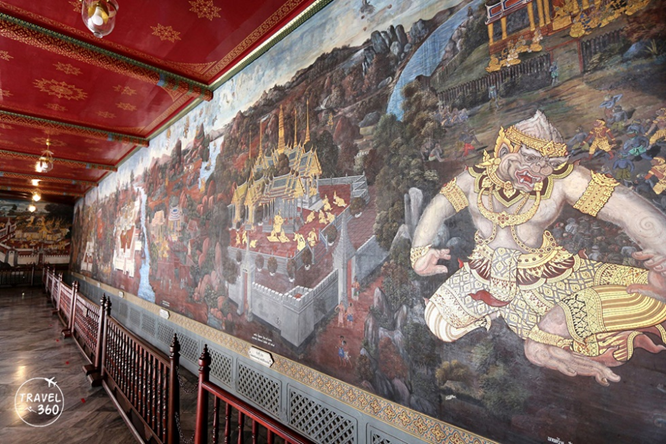
Photo Credit : mgronline.com
Origins and Evolution
The story of Ramakien originates from the Ramayana, the ancient Indian epic composed in Sanskrit by Sage Valmiki. While there is no exact record of when the Ramayana arrived in Thailand, it is believed to have been brought by Indian traders and first passed down through oral traditions as the “Tales of Phra Ram.” It was later rewritten in Thai poetic form as a creative reinterpretation.
The Ramakien is not a full transcription of any one version of the Ramayana, but rather a unique Thai retelling. While the storyline is the same for the most part, its details do not match any single Indian version completely. Instead, it shares elements with several versions from India and neighboring countries while also including its own additions, resonating most with Thai values and worldview.
The Ramakien tradition has shaped Thai literature since before the Sukhothai period. Its evolution can be divided into four major stages:
- Pre-Sukhothai to early Ayutthaya (before mid-13th century to early 14th century): Evidence from this early phase shows Ramakien being portrayed in art and architecture, such as temple carvings. The story was most likely passed down orally as local tales.
- Sukhothai to late Ayutthaya (1238-late 18th century): By the middle Ayutthaya period, the Ramakien developed into structured literary forms with more defined characters and plots. In the late Ayutthaya era, it was adapted into scripts for Khon dance and theatrical performances.
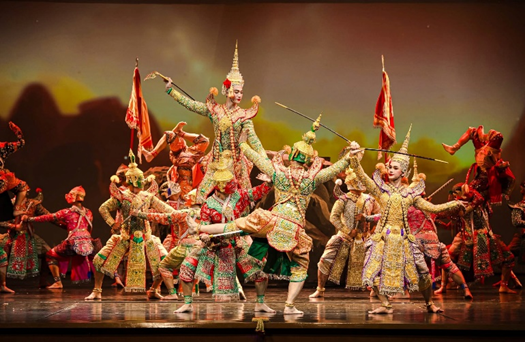
Photo Credit : Facebook Page “Sala Chalermkrung – ศาลาเฉลิมกรุง”
- Late Ayutthaya to Rattanakosin (late 18th century-1932): During the Thonburi period (1767-1782), King Taksin commissioned versions of the Ramakien for royal dramas. In the Rattanakosin period (1782-1932), more versions of the Ramakien were composed for education, moral instruction, and political commentary. It was also used to express ideals of kingship and glorify the monarchy.
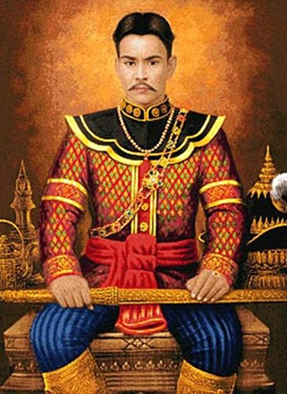
Photo Credit : arit.kpru.ac.th
- Modern adaptations: In Thailand today, the Ramakien continues to evolve. It has been adapted into comics, animated films, and pop songs, bringing the age-old epic to new generations.
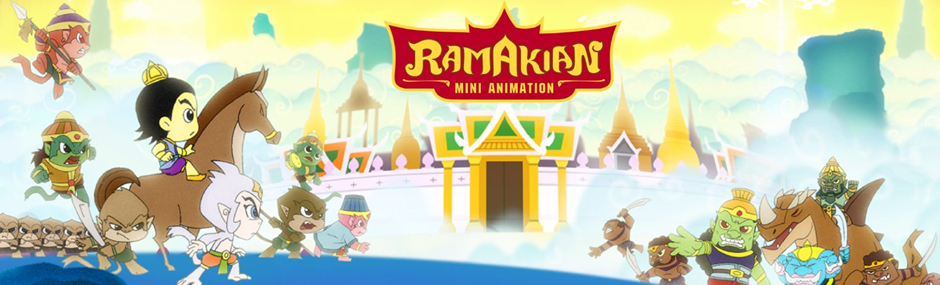
Photo Credit : vithita.com
There exist many versions of the Ramakien; however, the most popular is that composed under the patronage of King Rama I. After the fall of Ayutthaya, Ramakien survived in many incomplete versions. Recognizing its cultural importance, King Rama I (1782-1809) spearheaded the effort to compile and rewrite the story from many sources. Recorded in 116 volumes, this version became the most prominent and enduring of the Ramakien.
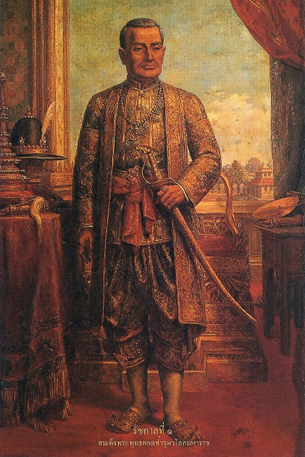
Photo Credit : en.wikipedia.org
The Thai version also introduced distinct cultural elements and creative details not found in other versions of the Ramayana, such as:
- Hanuman being attacked by different methods, including being pounded with a mortar or attacked by elephants;
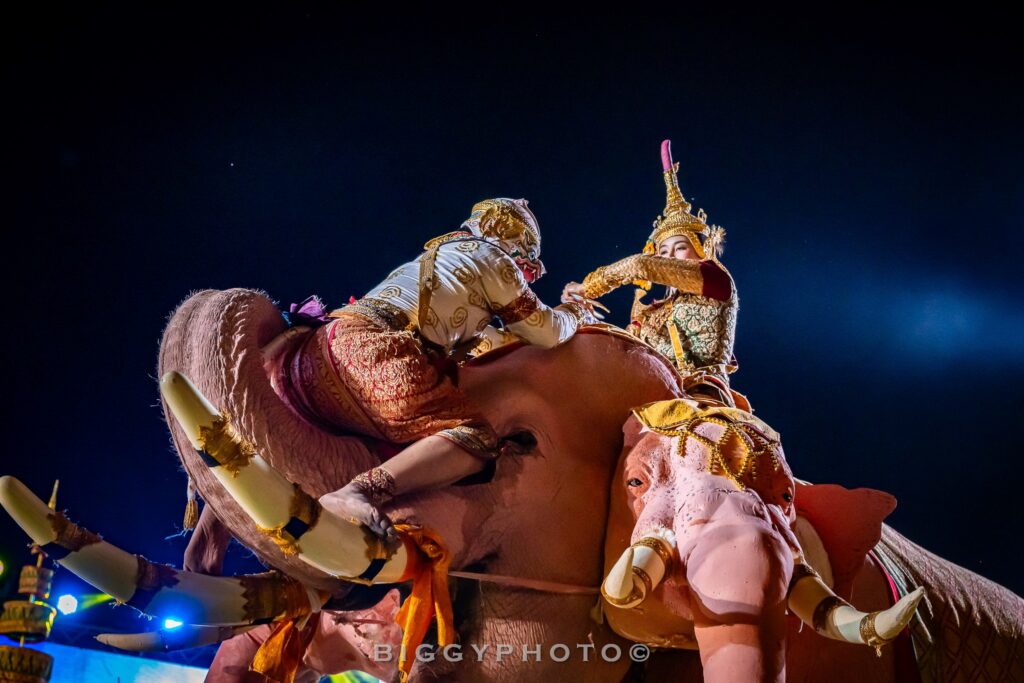
The Battle of Prommas at Wat Mahathat, Ayutthaya Historical Park Shows Hanuman Decapitating Erawan, the Multi-headed Elephant
Photo Credit : Facebook Page “BIGGYPHOTO”
- Soldiers being rewarded with wealth and bathing cloths while in the original Ramayana, they receive only praise;
- Hanuman extinguishing the fire on his tail using his own saliva, instead of ocean water;
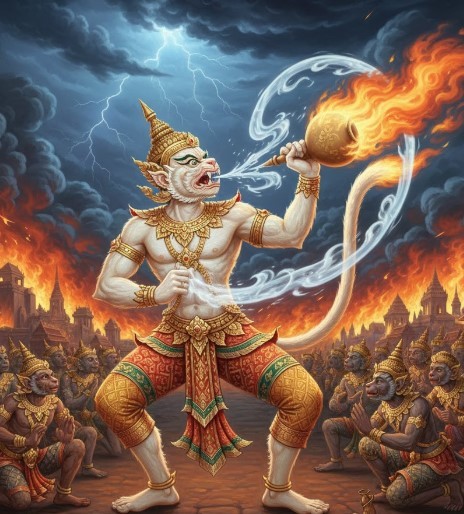
Photo Credit : This picture generated by AI Gemini
- Lord Indra descending from heaven five times to help Phra Ram overcome difficulties;
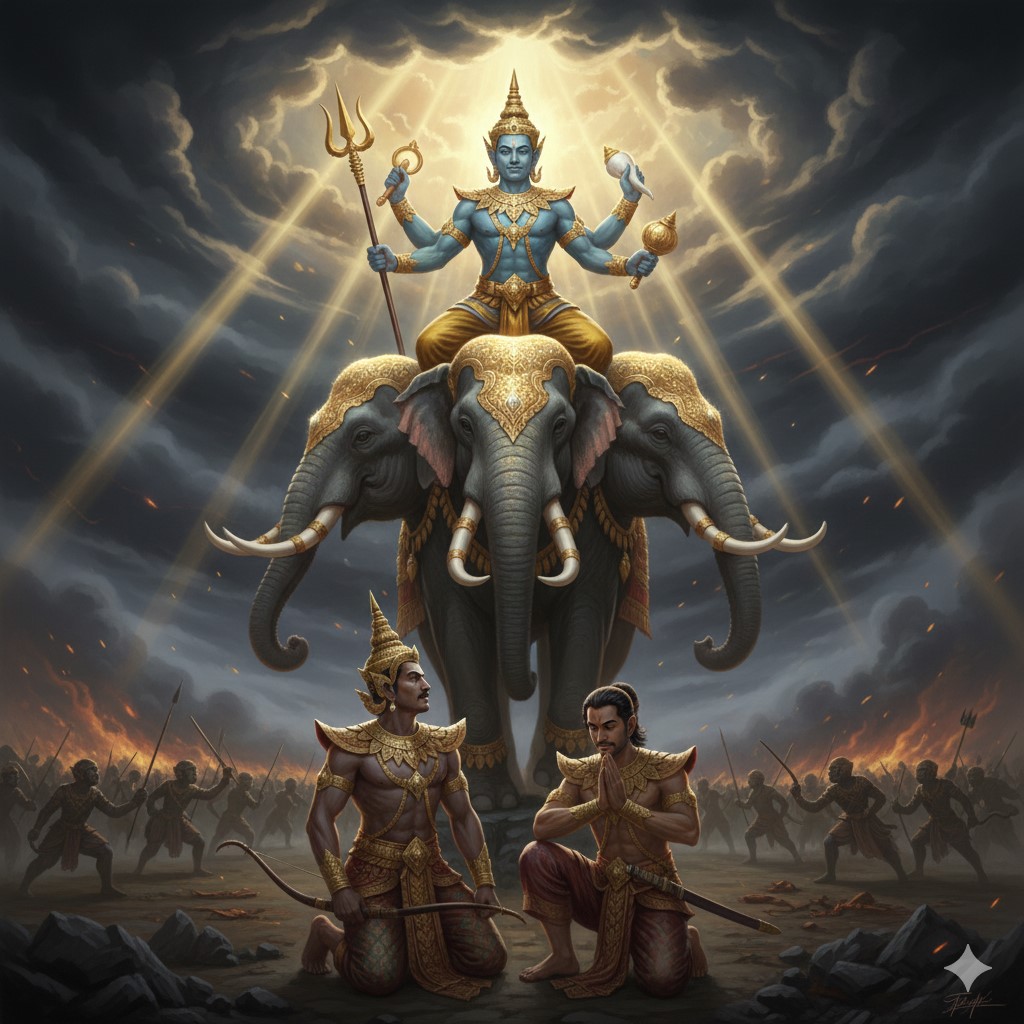
Photo Credit : This picture generated by AI Gemini
- Thotsakan (Ravana) removing his heart and hiding it in a box for protection.
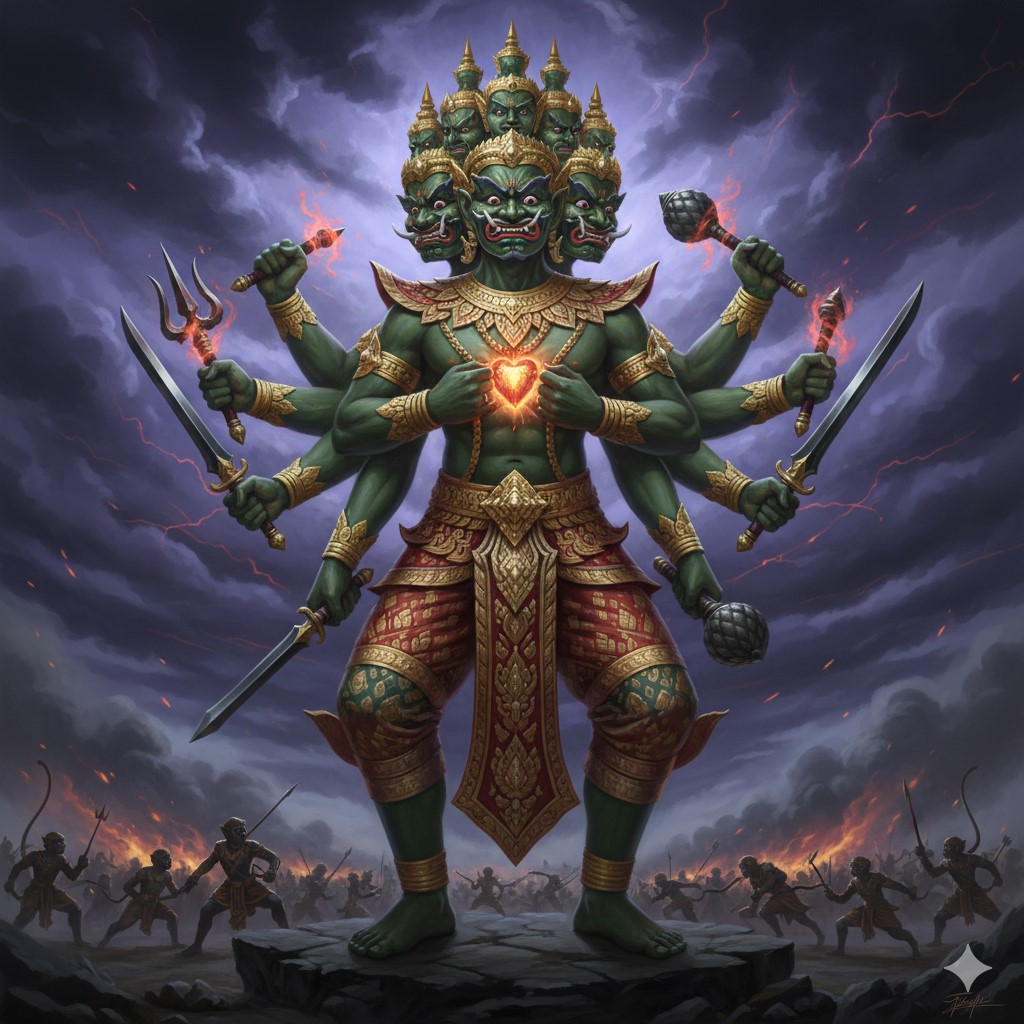
Photo Credit : This picture generated by AI Gemini
Overview of Ramakien
Major Characters:
Phra Ram (Rama)is an incarnation (avatar) of Lord Vishnu or Lord Narayana in Hindu tradition. He was born as the prince of Ayodhya with the divine mission to defeat Thotsakan (Ravana). Phra Ram’s consort was Nang Sida (Sita). His signature weapon was a magical arrow given by Lord Shiva. In Thai depictions, Phra Ram has a green body and four arms. As the embodiment of the ideal king, with virtue and discipline, Phra Ram, as a human, might seem ordinary, but with compassion, morality, and justice, he made sure that violence was his last resort. He knew how to lead, not just with strength, but with virtue. Because of this, even great warriors like Hanuman followed him with loyalty.
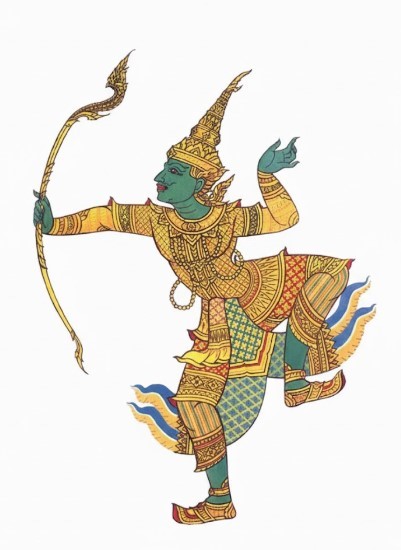
Photo Credit : gotoknow.org
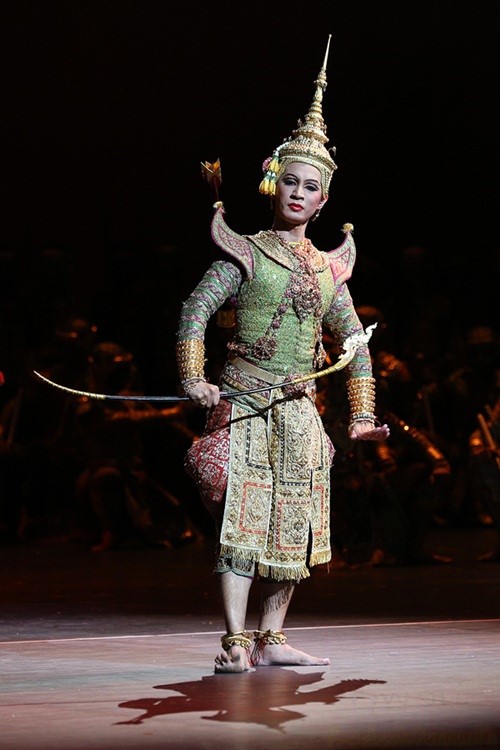
Photo Credit : drama.kapook.com
Phra Lak, with his golden skin, is the devoted younger brother of Phra Ram and the half-brother of Phra Sattarut. He is the incarnation of the King of the Serpents, Ananta Shesha, who serves as the throne of Lord Vishnu. As a symbol of brotherly love and unwavering loyalty, when Phra Ram was exiled to the forest for 14 years, Phra Lak chose to follow him, sharing in the hardships and standing beside him in many battles against the forces of Lanka.
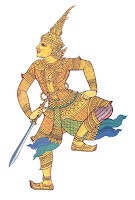
Photo Credit : gotoknow.org
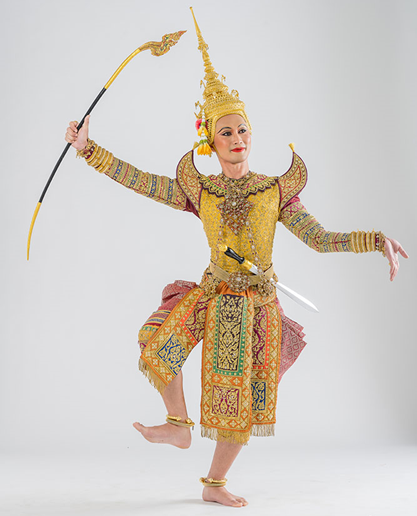
Photo Credit : mgronline.com
Nang Sida (Sita), the incarnation of Lakshmi (consort of Lord Narayana), was born asThotsakan’s daughter. However, astrologers foretold that she would bring misfortune to her father. To prevent this, Thotsakan banished her. A hermit found her and buried her in the earth, entrusting her to Mother Earth. Sixteen years later, the hermit unearthed her and named her Sita, meaning “plough marks”, and held a contest to find her a worthy husband. Phra Ram was able to lift the sacred bow, proving his strength, and won her hand in marriage.
Nang Sida is the model of femininity, dignity, self-esteem and loyalty. She was careful to protect her honor, never letting herself be tainted by any other man even though it meant staying longer in captivity. After being rescued, to prove her innocence and loyalty to Phra Ram, she bravely walked through fire. Her love and strength make her one of the most respected female characters in Thai literature.
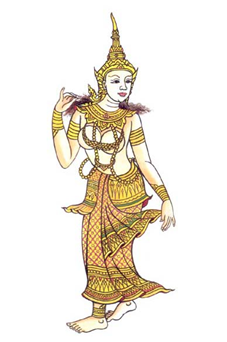
Photo Credit :
milk-sirikanya.blogspot.com
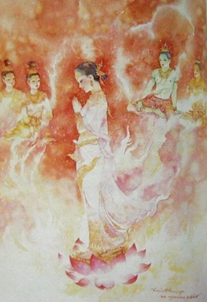
Photo Credit : palungjit.org
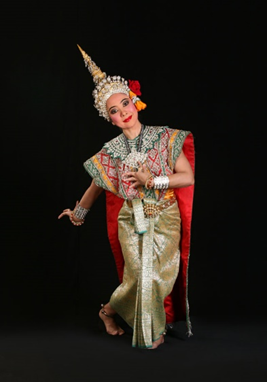
Photo Credit : hiclasssociety.com
Thotsakan (Ravana), the main antagonist, was a powerful demon king. He was a reincarnation of the giant Nonthaka, who had once battled Lord Vishnu. In Thai tradition, Thotsakan is portrayed with a green body, ten faces, and twenty arms. He was considered invincible as he had hidden his heart in a magic box kept by his teacher, Sage Kobutr. Upon hearing of Sita’s beauty, he kidnapped her, not knowing that she is his daughter and despite her being married. This led to a war with Phra Ram, causing great loss on both sides, and finally Thotsakan’s life. Thotsakan represents a tragic villain, power and ego. But, on closer look, he reflects many human traits: anger, pain, ambition, desire, and pride. However, consumed by his ego, Thotsakan leads himself to a crushing demise.
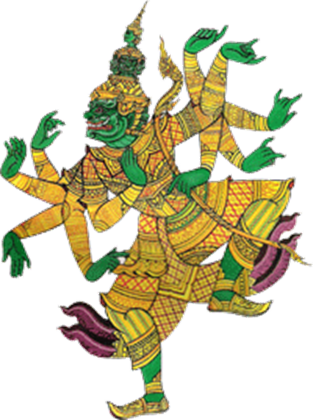
Photo Credit : gloryoframa.blogspot.com
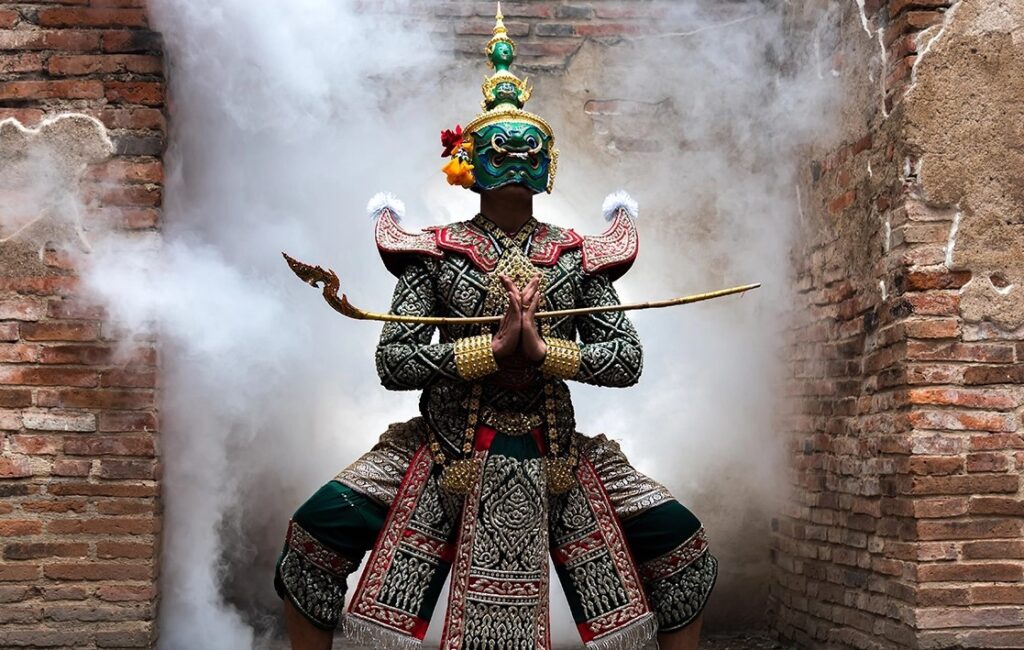
Photo Credit : thairath.co.th
Hanuman is an albino monkey and a key ally of Rama. He carries a trident. Hanuman can grow four faces and eight arms. His supernatural abilities include a crystal fang in his mouth, glowing diamond fur, earrings, invisibility, and a magical yawn which produces stars and moons. Even when struck down, he can be revived by the power of the wind.
Exuding bravery, devotion, and mischief, Hanuman is one of the most beloved characters in the Ramakien. Unmatched in battle and skilled in magic, clever, funny – yet above all, Hanuman is deeply devoted to Phra Ram and Nang Sida. In one powerful scene, he proves this by tearing open his chest to reveal that in his physical heart lives the couple and nothing else, showing that he lives only for them. In the Indian Ramayana, Hanuman is portrayed as celibate, composed, and spiritually focused. In the Thai Ramakien, he is a playful, charming flirt.
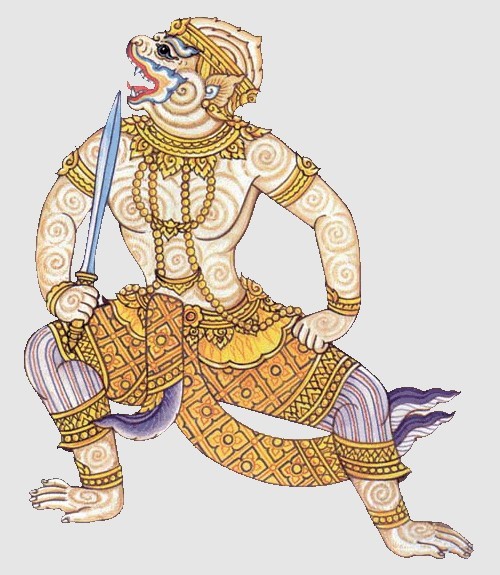
Photo Credit : theprotagonis.blogspot.com
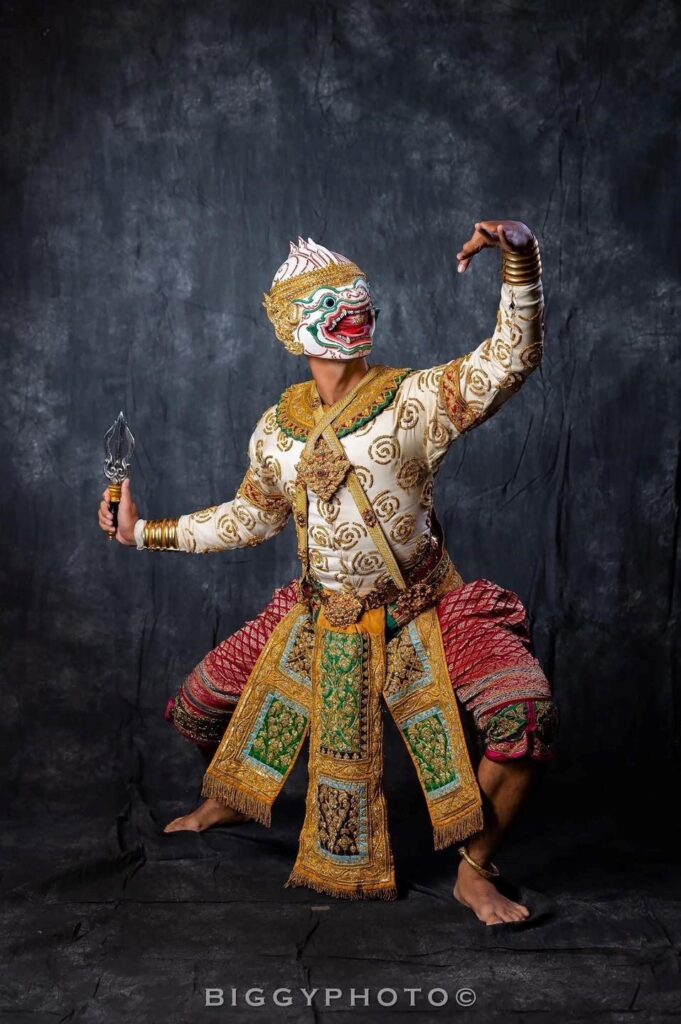
Photo Credit : Facebook Page “BIGGYPHOTO”
Key Storyline:
The Ramakien is a tale of war between Phra Ram, representing the gods and humans, and Thotsakan, leader of the demons. Phra Ram’s wife, Nang Sida, is abducted by Thotsakan, and Phra Ram sets out to rescue her. He is joined by his loyal younger brother, Phra Lak, and Hanuman, a white monkey with magical powers. The battle between the good and the evil lasts many years, but in the end, Thotsakan is defeated.
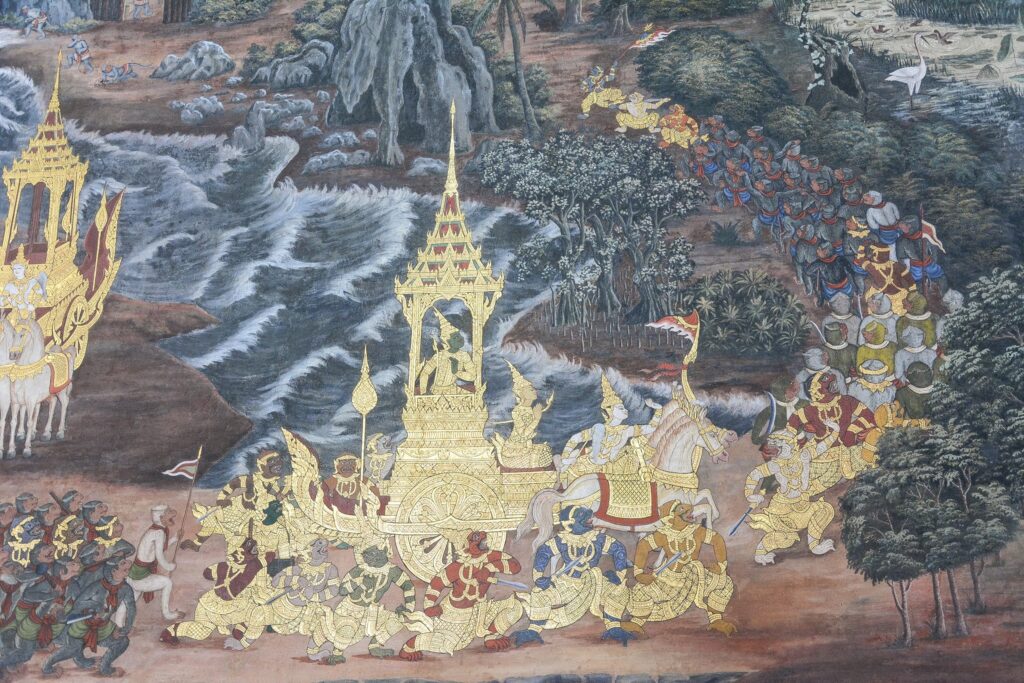
Photo Credit : Facebook Page “โขนสงขลานครินทร์”
The story begins with Phra Ram renouncing worldly life and wandering through the forest with Nang Sida and Phra Lak. One day, Thotsakan’s younger sister sees Phra Ram in the forest and falls in love with him. When he rejects her, she tells Thotsakan that Nang Sida is incredibly beautiful. Thotsakan, unaware that Nang Sida is his own daughter who was banished at birth, becomes obsessed with her and abducts her, keeping her in the city of Lanka.
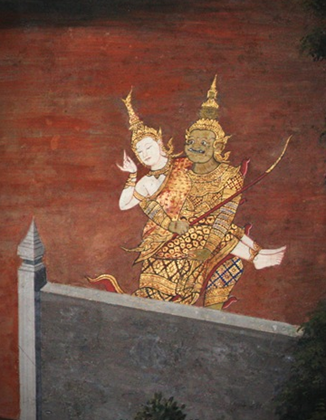
Photo Credit : bloggang.com
To rescue his wife, Phra Ram recruits Hanuman as his top warrior. Hanuman leads an army of monkeys across the ocean to Lanka to wage war. The battle continues for many years, and eventually all Thotsakan’s relatives die in the battle. When Thotsakan finally joins the war himself, Phra Ram shoots him at the heart many times but fails to kill him because Thotsakan has hidden his heart in a magic box kept by a sage. Hanuman tricks Thotsakan into retrieving the heart box. In the final battle, Phra Ram shoots a magic arrow at Thotsakan, and Hanuman smashes the heart box, killing him.
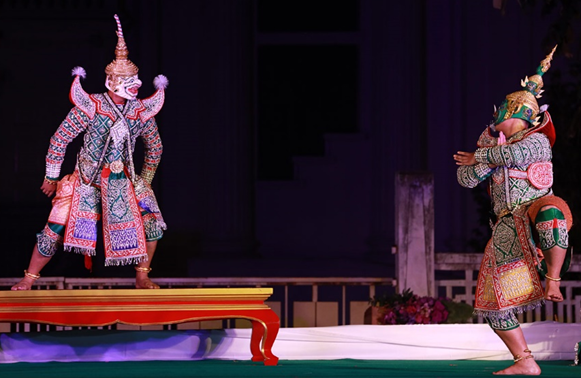
Hanuman Smashes the Heart Box, Killing Thotsakan
Photo Credit : bloggang.com
Phra Ram returns to rule Ayodhya. One day, a court lady asks Nang Sida to draw a picture of Thotsakan. Phra Ram, only seeing the drawing, becomes angry and orders her execution. But Phra Lak, unable to kill her, sends her to live with the hermit instead. Nang Sida later gives birth to a son named Mongkut, and the hermit magically brings her another son, Phra Lop.
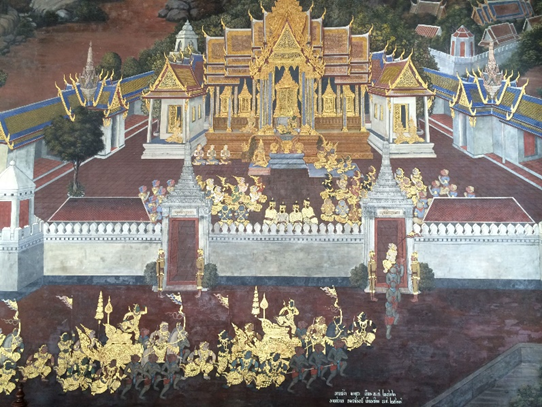
Photo Credit : matichon.co.th
When Mongkut grows up, he captures Phra Ram’s royal horse. A fight breaks out between the two, who soon discover their true relationship. Phra Ram wants Nang Sida to return with him, but she refuses. Finally, Lord Shiva intervenes and helps them reconcile.
Ramakien as Moral Literature
More than just a tale of war and adventure, the Ramakien is a religious and moral epic that reflects the timeless struggle between good and evil. Within its exciting plot, the story teaches moral lessons and values such as courage, loyalty, wisdom, and gratitude.
Because of its literary and cultural importance, Ramakien is featured in Thai language textbooks across grade levels. One great example is the chapter on the Battle of Maiyarap. This chapter highlights the character Macchanu, the son of Hanuman. Macchanu was raised by Maiyarap (Ahiravan), the demon king of the netherworld, and tasked with guarding its entrance.
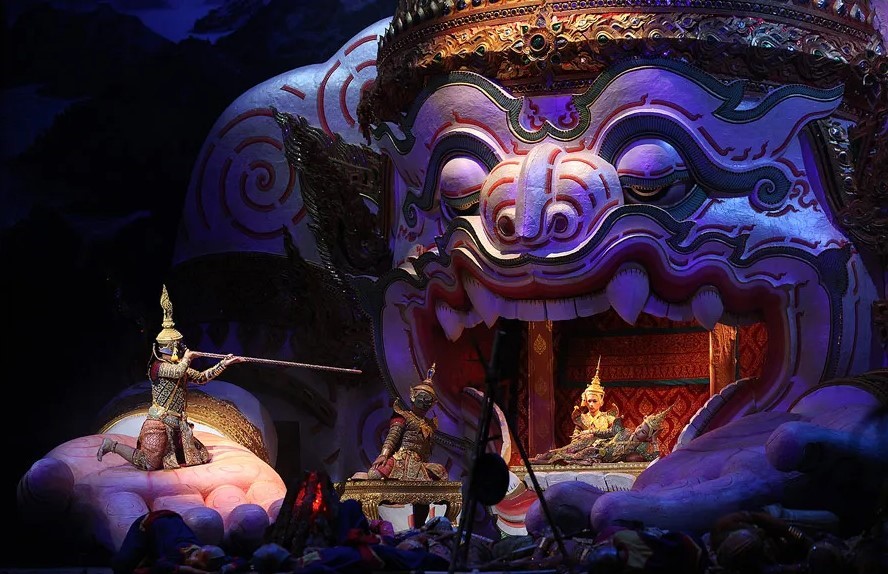
Photo Credit : cheewajit.com
The story goes as follows: Maiyarap, ordered by Thotsakan to assist in the war against Phra Ram, uses a magical drug to put Phra Ram’s army to sleep. He then abducts Phra Ram to the netherworld. There, Phra Ram is locked in an iron cage and guarded by giant soldiers. Realizing Phra Ram is missing, Hanuman embarks on a journey through many dangers to rescue him. He meets his son, Macchanu, and asks him to reveal the way to the netherworld. Remembering the kindness of Maiyarap who raised him but at the same time feeling grateful toward Hanuman, the real father who has given him life, Macchanu does not directly reveal the map. Instead, he offers a cryptic clue. Hanuman deciphers the clue, rescues Phra Ram, and returns to fight Maiyarap, a duel in which he claims victory.
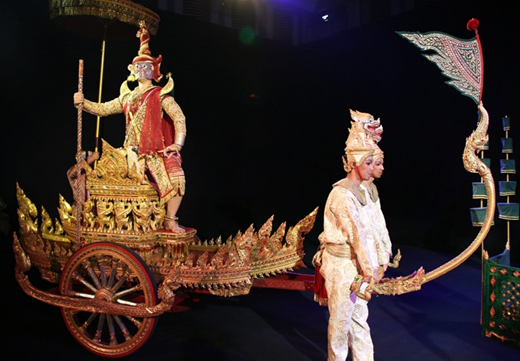
The Battle of Maiyarap
Photo Credit : mgronline.com
There are many lessons that can be drawn from this chapter:
1. Gratitude: Gratitude is shown by Hanuman and Macchanu. Hanuman risks his life to save his master, Phra Ram, demonstrating deep loyalty and gratefulness. Most notably, Macchanu shows gratitude toward both Hanuman, his real father, and Maiyarap, his adoptive father. Although Hanuman did not raise him, Macchanu acknowledges him with respect and apologizes for not recognizing him sooner. Yet, Macchanu also remains grateful to Maiyarap for raising him. He cannot bring himself to betray Maiyarap by giving Hanuman direct directions to defeat him. Instead, he offers a subtle clue, leaving the final decision to Hanuman.
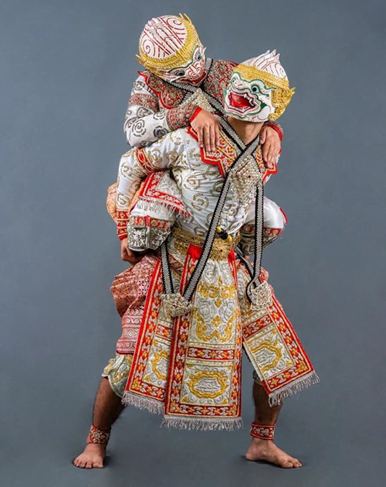
Photo Credit : pinterest.com
2. Dutifulness: Despite being young, Macchanu takes his role seriously. Assigned to guard the entrance to the netherworld, he fulfills his duty with diligence and care.
บัดนั้น มัจฉานุผู้ใจแกล้วกล้า
ซึ่งอยู่ในสระคงคา เป็นด่านรักษาชั้นใน
ราตรีเที่ยงคืนเคยเที่ยว ลดเลี้ยวกระเวนทางใหญ่
ก็สำแดงแผลงฤทธิเกรียงไกร ขึ้นไปจากท้องชลธร
ถึงที่ขอบสระก็หยุดอยู่ แลดูไปทั่วทุกสถาน
เห็นวานรเผือกผู้อหังการ ล่วงด่านผ่าทางเข้ามา
“The brave Macchanu, guarding the inner pond, patrolled until midnight, inspecting every nook and cranny. With his supernatural powers, he rose to the surface and saw Hanuman.”
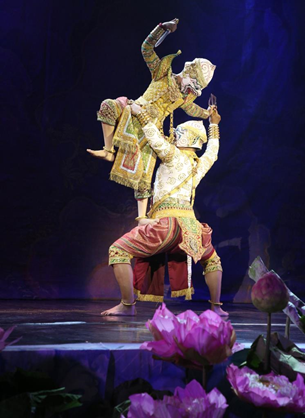
Photo Credit : mgronline.com
3. Prudence: Hanuman is not only brave but also calculated and composed. When Maiyarap attempts to trick him into a duel using palm tree clubs, Hanuman doesn’t act rashly. Instead, he pauses and thinks through the situation.
บัดนั้น คำแหงหนุมานทหารใหญ่
ได้ฟังก็ดำริตริไตร อันอ้ายไมยราพอสุรา
มันคิดเปรียบเทียบดั่งนี้ เห็นจะมีอุบายยักษา
กูก็ไม่เกรงฤทธา จะซ้อนกลฆ่ามันให้วายปราณ
“Hearing what Maiyarap said, Hanuman contemplated the meaning until he clearly understood that Maiyarap had some ulterior motives. Hanuman then devised a further tactic.”
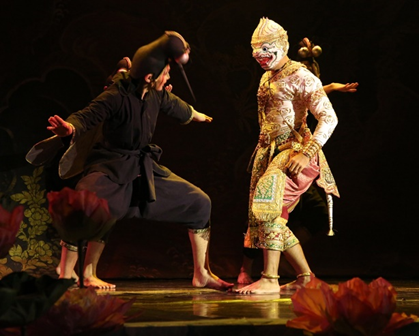
Photo Credit : mgronline.com
4. Honesty: The story also celebrates honesty and integrity. Despite foreseeing the fatal danger, Maiyarap honors his word to Hanuman. When they agree to take turns striking each other with the palm tree club, he keeps his promise even though it may cost him his life.
เมื่อนั้น พญาไมยราพยักษา
ได้ฟังจึ่งตอบวาจา อันคำเราว่านี้โดยธรรม์
แม้นมาตรมิคงในสัจ ขอจงหัสนัยน์รังสรรค์
กับฝูงเทวาทั้งนั้น สังหารชีวันให้บรรลัย
“When Maiyarap heard Hanuman’s promise, he made the same promise, declaring it solemnly. If he broke his word, may Indra cause him to be killed by the monkeys.”
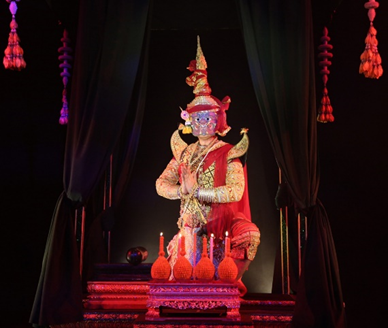
Photo Credit : mgronline.com
Ramakien in Thai Culture and Art
Literature
The poetic nature of the Ramakien, an expansive work of literature, requires a high degree of skill in wordplay. Poets employ a wide variety of vocabulary and synonyms to characterize different figures and engage readers. A notable literary device in the Ramakien is repetition of sound, often used to achieve a rhythmic, melodic quality. Unfortunately, much of this beauty is difficult to translate into English, as it relies heavily on the nature of the Thai language.
The Ramakien is, thus, a literary masterpiece that has been studied and appreciated by older and younger generations alike. Its authors stand as icons for later poets and writers. Just as Western students study classical epics such as Homer’s The Iliad, and The Odyssey, Thai students engage with the national epic of Ramakien.
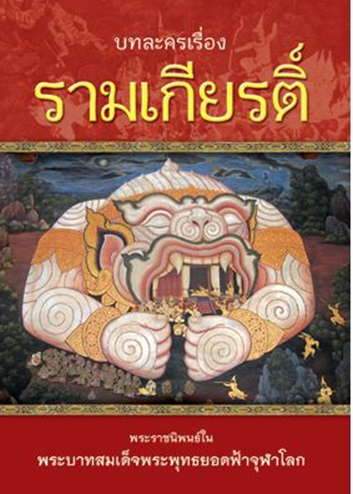
Photo Credit : thailand.kinokuniya.com
Language
Many expressions derived from the Ramakien still persist in modern Thai idiomatic usage. These include:
- Heart box (กล่องดวงใจ – klong duang jai): Thotsakan has removed his heart, hiding it in a box, rendering him immune to harm. In Thai, the phrase “heart box” has come to symbolize anything a person treasures dearly, something as valuable as life itself, requiring great protection and care.
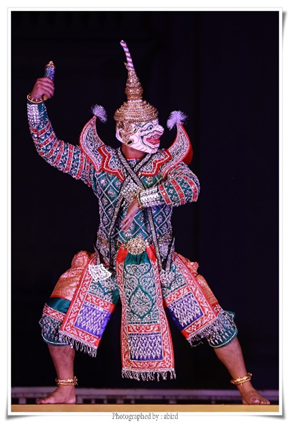
Photo Credit : bloggang.com
- Tiny well (น้ำบ่อน้อย – nam bo noi): When Hanuman set Thotsakan’s city ablaze, the tip of his tail also caught fire. Unable to extinguish it, he sought advice from a hermit who suggested using “the water from a tiny well.” Hanuman interpreted this to mean his own saliva. By placing the tip of his tail in his mouth, the fire was extinguished. This expression now implies that tactful words can resolve difficult problems.
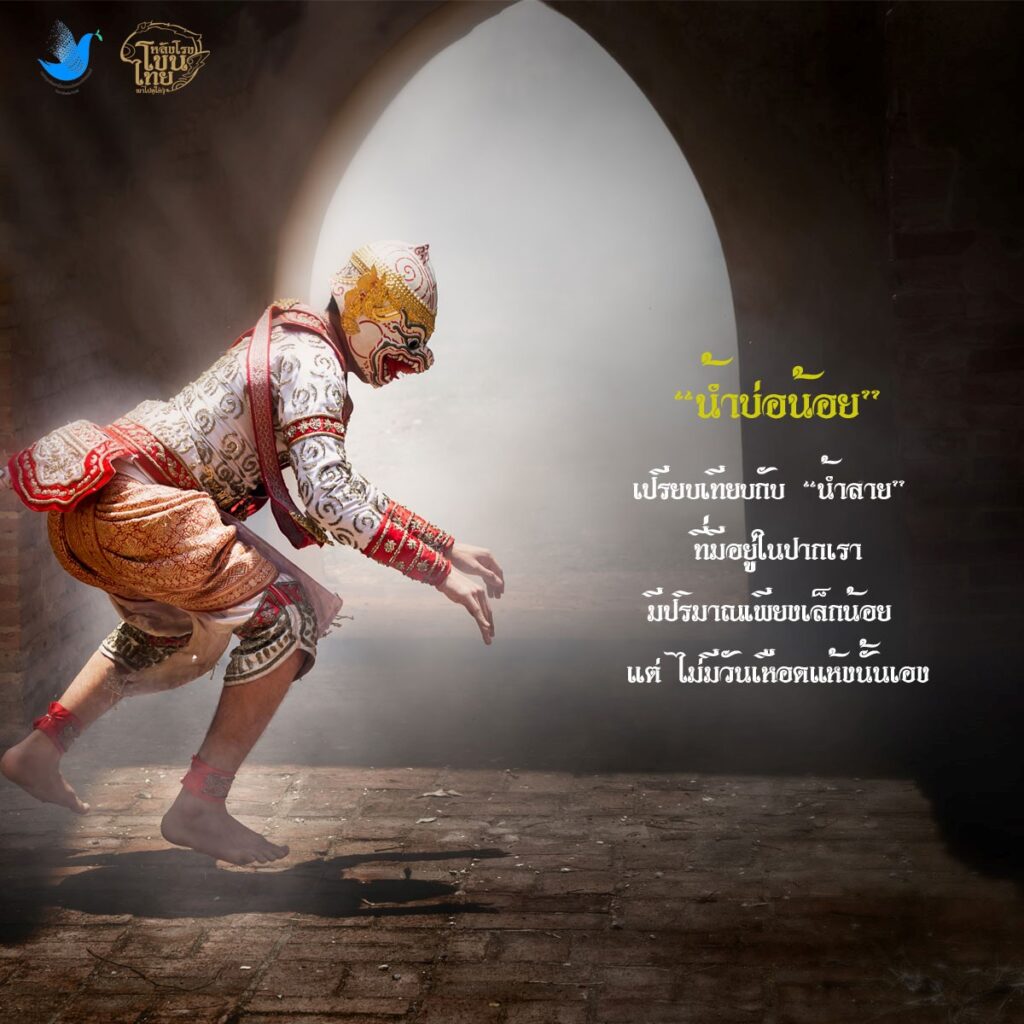
Photo Credit : Facebook Page “หลังโรงโขนไทย พาไปดูให้รู้”
- Measuring footprints (วัดรอยเท้า – wat roy thao): Thorapha was cursed to be born as a bull and would only die at the hands of his own son. To prevent this, he always killed his children. His wife, determined to protect their child, secretly gave birth to Thoraphi in a cave. When the son, Thoraphi, matured, he measured Thorapha’s footprints against his own and, upon finding them equal, challenged and ultimately defeated his father. Today, the metaphor of “measuring footprints” refers to a younger or subordinate figure quietly preparing to surpass a superior.
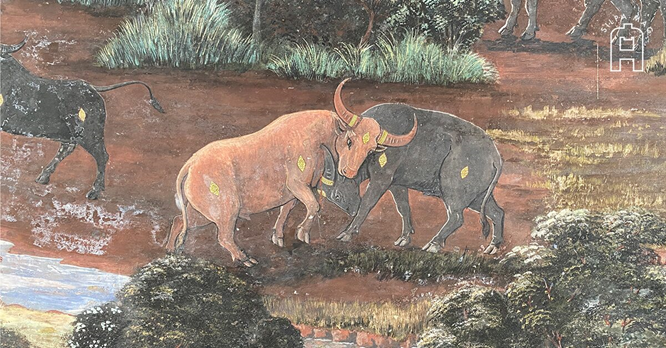
Photo Credit : silpa-mag.com
Performing Arts
With a profound impact on Thai performing arts, the Ramakien is the primary story performed in Khon(masked dance),Nang Yai (shadow puppetry), and traditional puppetry. Among these, Khon is considered a classical art form of the highest refinement and draws almost exclusively from the Ramakien.
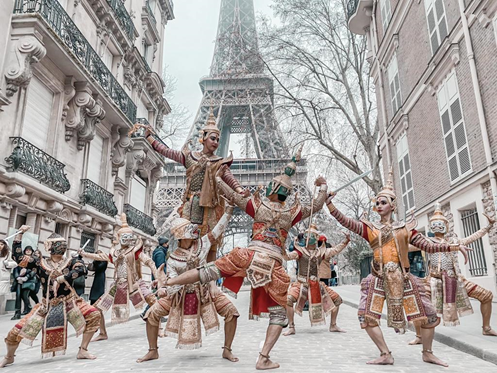
Photo Credit : mgronline.com
Nang Yai, another form of traditional Thai entertainment, differs from Khon in that it uses intricately crafted shadow puppets instead of human performers in costume. These puppets are made from large pieces of cowhide, carved into detailed silhouettes representing characters or scenes from the Ramakien. Each puppet has handles extending below, allowing the puppeteer to maneuver them with precision. Performances are staged behind a white cloth screen, with light projected from behind, casting vivid shadows.
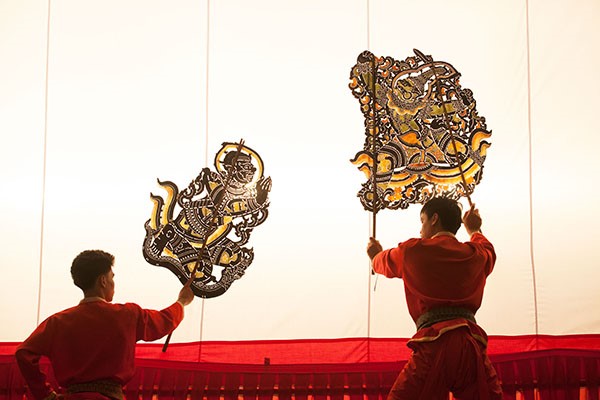
Photo Credit : tatnews.org
Traditional Thai puppetry is another genre of performance art that has been influenced by Ramakien. On some occasions, performances feature a creative blend of a playful “battle” between a shadow puppeteer, a string puppeteer, and a Khon dancer. Although puppetry shares similarities with Khon in terms of movement, singing, and narrative structure, especially when portraying episodes from the Ramakien, it differs in tone and interaction. Puppetry tends to be more relaxing and entertaining, incorporating direct audience engagement, offering a more accessible and dynamic experience compared to the formal style of Khon.
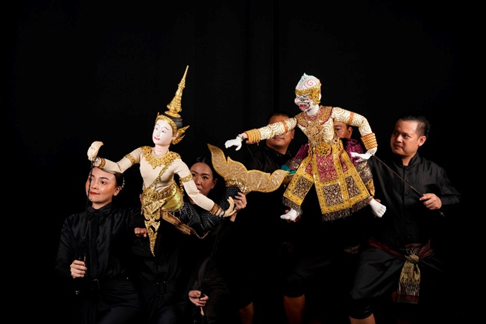
Photo Credit : cranecreations.ca
Visual Arts
Murals and sculptures across temples and royal sites depict the story of Ramakien. The most prominent example is the mural painting on the gallery walls of the Temple of the Emerald Buddha (Wat Phra Kaew), which portrays the whole storyline of the Ramakien. These murals are renowned for their creative integration of the original story into a Thai context, architecture, and ways of life.
In addition to murals, Ramakien reliefs and sculptures appear in numerous sacred spaces, such as the reliefs of Ramakien figures at Wat Pho, the statues of giants at Wat Arun, and countless gold and lacquer (lai rod nam) motifs that adorn scripture cabinets in temples across the country.
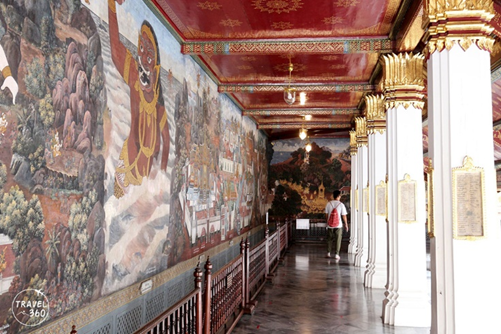
Photo Credit : mgronline.com
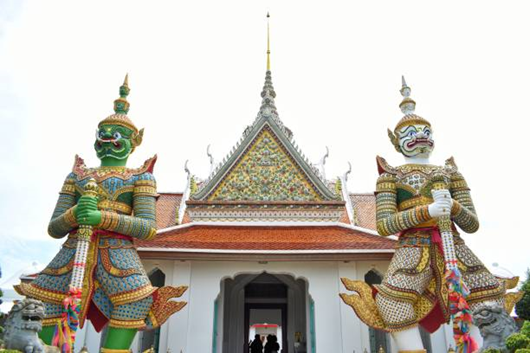
Photo Credit : istockphoto.com
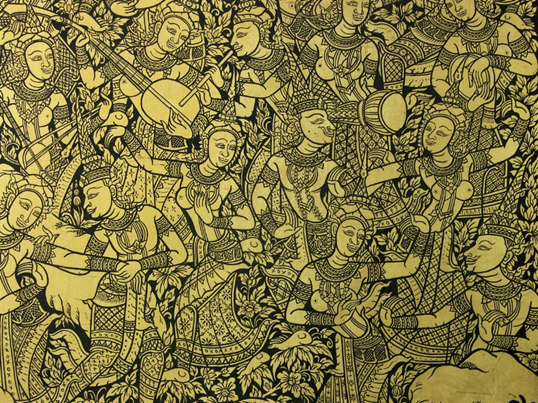
Photo Credit : istockphoto.com
Society and Monarchy
The Ramakien also functions as a model myth for Thai social and political structures. It has influenced the monarchy, particularly through the adoption of the name “Rama” from ancient rulers such as Phra Ramathibodi (1351-1369) and Phra Ramesuan (1339-1395) to the modern Chakri dynasty, where each king has borne the name Rama (e.g., Rama I to Rama X), linking the monarchy to divine legitimacy through Vishnu’s incarnation.
The epic has informed traditional ceremonies and customs, including royal and military rituals like auspicious timing for troop movements and coronations. These practices reflect a synthesis of Hindu-Buddhist beliefs and Southeast Asian political culture, where divine authority and moral merit is imbued in kingship.
Moreover, many place names in Thailand mirror those found in the Ramakien, such as the Kingdom of Ayutthaya (now Province of Ayutthaya) from Ayodhya, the province of Lopburi from the city of Phra Lop, Pang Sida National Park expanding across the provinces of Sa Kaeo and Prachinburi, Thotsakan Intersection in Bang Khae, etc.

Photo Credit : thainationalparks.com

Photo Credit : youtube.com
Influence on Popular Media
With its timeless plot, universal themes, and complex characters, the Ramakien continues to resonate in contemporary Thai society.
Music Adaptation: Songs that draw on classical Thai literature, particularly the Ramakien, have become increasingly popular in recent years. These songs show how reinterpretations of classical literature through music can personalize characters and make them emotionally accessible to new audiences. The following are some examples:
- I’m sorry (Sida) by The Rube – a slow rock song featuring a rap section that captures Phra Ram’s regret and emotional conflict as he doubted Nang Sida’s loyalty to him
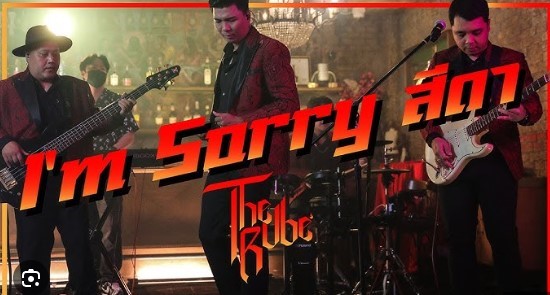
Photo Credit : youtube.com
- The Bad Guy Who Loves You (ตัวร้ายที่รักเธอ) by Joe Tossakan – a melancholy ballad blending Thai classical motifs, presenting Thotsakan as a tragic figure with sincere affection yet unfair destiny
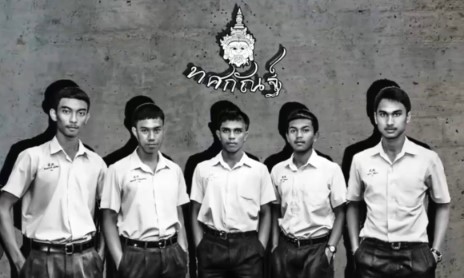
Photo Credit : youtube.com
- Devil’s Heart (หัวใจทศกัณฐ์) by TACHAYA – a beautiful vocal and rap performance highlighting the duality of love and destruction embedded in a demonic character who has a heart like any other man
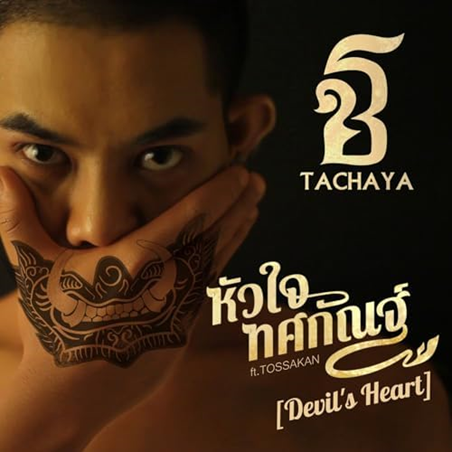
Photo Credit : amazon.com
- Hanuman (หนุมาน – ก็คิดถึง) by Tae Sila – a sentimental track describing a man who has to leave the love of his life for his duty, just like Hanuman leaving his beloved Suvannamaccha to fulfill his duty as Phra Ram’s soldier.
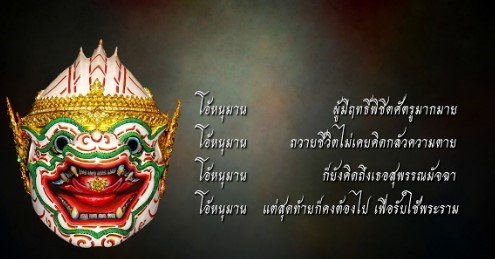
Photo Credit : youtube.com
Animation and Film: For many, the Ramakien remains primarily associated with classical Khon or textbooks, both of which are often perceived as difficult or inaccessible, resulting in the epic being underrepresented in educational media. However, recent efforts have sought to reverse this trend with animated films and digital storytelling. Two notable examples include:
- Mantra Warrior – a modern animated film featuring sleek visuals, revitalizing the Ramakien with modern aesthetics, now available on Netflix
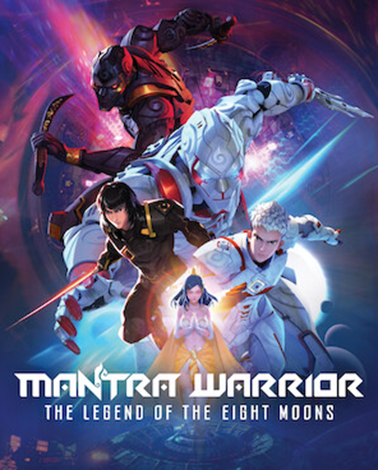
Photo Credit : letterboxd.com
- Ramavatar: The Animation – this film literally brings the murals of Ramakien found at Wat Phra Kaew to life with new cinematic techniques
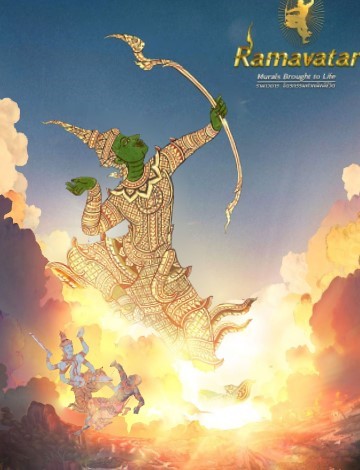
Photo Credit : Facebook Page “Ramavatar Murals Brought to Life”
In addition, the Ministry of Culture has endorsed such projects as tools of soft power and cultural diplomacy, especially within ASEAN contexts, highlighting their role in fostering regional cultural identity and international goodwill.
Thai Values Reflected in the Ramakien
Overall, the Ramakien reflects key Thai values, beginning with a deep respect for hierarchy and seniority. Characters such as Phra Ram, the relationship between Hanuman and his son Macchanu, and even Thotsakan, for instance, consistently demonstrate deference to elders, kings, and sages, underscoring social order. The epic also emphasizes the importance of family, duty, and loyalty. Phra Ram’s unwavering commitment to Nang Sida, Nang Sida’s faithfulness to her husband, and Hanuman’s devotion to his king all reflect the Thai ideals of familial bonds and selfless service. Hanuman’s character embodies the Thai value of blending playfulness with seriousness, reflecting the Thai people’s joyful approach to life. While he is witty, flirtatious, and mischievous in Thai adaptations, he remains brave, respectful, and fiercely loyal, illustrating how lightheartedness can coexist with responsibility. The story also carries strong Buddhist undertones, reflecting the harmonious blend of Hinduism and Buddhism in Thai spirituality. Central themes include karma, as seen in Thotsakan’s downfall due to past misdeeds, and morality through Phra Ram’s adherence to virtue, even in conflict.
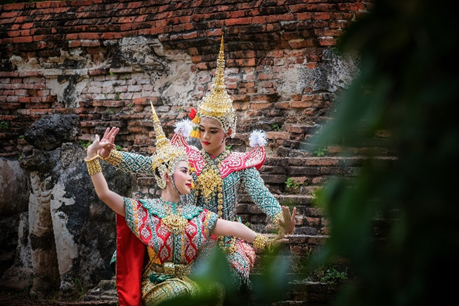
Photo Credit : mthai.com
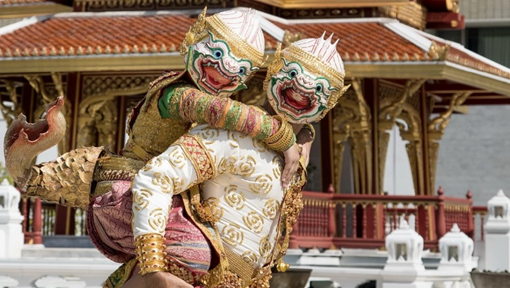
Photo Credit : bangkokbiznews.com
Contemporary Relevance
The presence of Ramakien in Thai identity and national pride has been and will always be prominent. Its themes and values continue to symbolize Thai heritage, with many key characters as cultural icons. The story’s influence is visible in royal traditions, education, language, and everyday expressions, keeping it relevant in both formal and popular settings. Modern reinterpretations help sustain its presence – from Khon performances reimagined with contemporary staging, to animated films and pop songs. At its core, the Ramakien still resonates because it speaks to universal human experiences: loyalty, love, justice, and inner conflict. Its moral lessons remain applicable, while its blend of drama, fantasy, and humor ensures enduring entertainment. This combination of cultural depth and emotional relevance secures the Ramakien’s place in both traditional and modern Thai life.
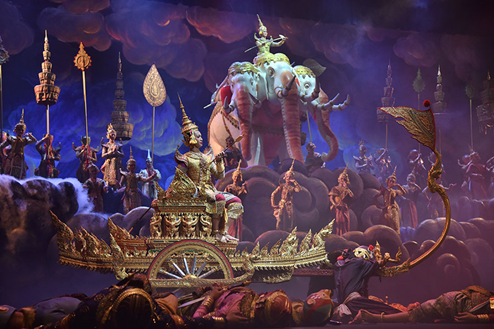
by the Support Foundation under the Patronage of Her Majesty Queen Sirikit: The Battle of Indrajit – The Prommas Arrow Episode.
Photo Credit : cheewajit.com
Conclusion
At this point, the Ramakien epic is almost spiritual. It permeates every domain of Thai culture. But seeing is believing. This article is only a preview of the fascinating realm of the eternal battle of good and evil. To truly appreciate its beauty, we invite you to visit the murals at Wat Phra Kaew, experience a live Khon performance, or immerse yourself in a digital experience of songs and animated movies which are readily accessible. These encounters will bring the story to life through art, music, and tradition, and open a gateway to a deeper understanding of Thai values and worldview.
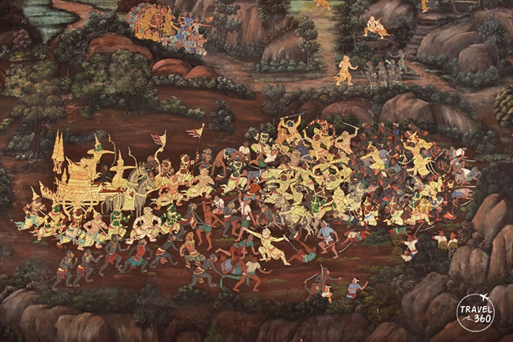
Photo Credit : mgronline.com
The story of Ramakien is an essential aspect of Thai culture and heritage. This timeless literary masterpiece continues to reflect Thai values and shape the Thai way of life to this day. Join us as we continue to explore more stories from across Thailand and discover the rich diversity that shapes Thainess.
Sources:
Sources:
- https://www.trueplookpanya.com/learning/detail/152
- https://www.trueplookpanya.com/learning/detail/17721
- https://www.facebook.com/photo.php?fbid=1040249663503010&id=407396353455014&set=a.407454776782505
- https://www.silpa-mag.com/history/article_92784
- https://tinyurl.com/bdhvynaa
- https://tinyurl.com/9p4p4ht7
- https://tinyurl.com/yj4pw33a
- https://tinyurl.com/yf39w76w
- https://tinyurl.com/zpt8sas3
- https://www.culture.go.th/ewtadmin/ewt/culture_th/ewt_news.php?nid=4142&filename=index
- https://archive.clib.psu.ac.th/online-exhibition/nangyai/page10.html
- https://www.instagram.com/p/Cq0sVCOPEST/?img_index=2
- https://www.hiclasssociety.com/?p=43106
- https://www.finearts.go.th/promotion/view/36696
- http://164.115.41.171/web/klongbangluang/info_puppet.html
- https://www.youtube.com/watch?v=tkzOlK28pic
- หนังสือบทละครเรื่องรามเกียรติ์ เล่มที่ ๑ พระราชนิพนธ์ในพระบาทสมเด็จพระพุทธยอดฟ้าจุฬาโลกมหาราช สำนักพิมพ์เพชรกะรัต ฉบับจัดพิมพ์ พ.ศ. ๒๕๕๓

Author: Soonyata Mianlamai
Uploaded on January 6, 2026