

Beyond its beautiful scenery of misty mountains and forests, Northern Thailand is also home to diverse ethnic communities. Among these are the Tai Yai, or Shan ethnic group whose deep-rooted Buddhist values are expressed through their time-honored traditions and ceremonies. One such practice is Poy Ja Tee (ปอยจ่าตี่), also known as the Sand Pagoda Festival. Celebrated annually in many Tai Yai villages, particularly in Mae Hong Son province, this festival brings the entire village together to build sand pagodas as offerings to the Buddha. This article explores what Poy Ja Tee is, its values, and its significance in strengthening communal bonds and preserving Tai Yai’s cultural identity in modern Thailand.
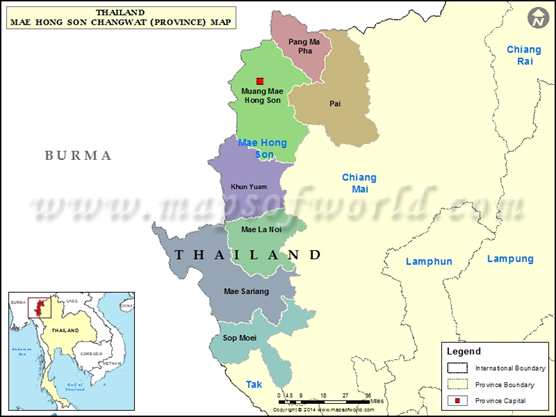
Photo Credit : mapsofworld.com
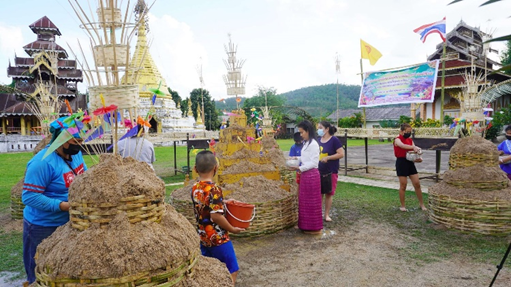
Photo Credit : chiangmainews.co.th
What is Poy Ja Tee
To fully understand the tradition, one should begin with its name. In the Tai Yai dialect, the term “poy” (ปอย) means a festival, a celebration, or an auspicious gathering while “ja tee” (จ่าตี่), or sometimes “je tee” (เจตี่), is similar in meaning to the word chedi or pagoda. Put together, Poy Ja Tee refers to the Sand Pagoda Festival. During the festival, villagers carry sand to the temple grounds where the sand is piled high and shaped into miniature or sometimes large pagodas. The sand pagodas are beautifully decorated with fresh flowers, incense sticks, candles, lanterns, and tung (ตุง), which are northern-style flags made from brightly colored cloth or paper.
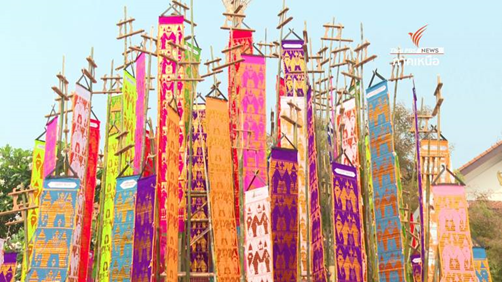
Photo Credit : thaipbs.or.th
Tai Yai communities place great importance on merit-making as they believe that virtuous acts lead to success, peace, and well-being for their families. Poy Ja Tee is one of the Buddhist merit-making ceremonies they observe throughout the year. It takes place around Visakha Bucha Day, which commemorates the birth, enlightenment, and passing of the Buddha, falling on the 15th full moon day of the sixth lunar month, usually in May or June. The festival is usually held within the local temple grounds, where monks, villagers, and visitors can participate in the ceremony. Mae Hong Son province is one of the most active regions for this festival due to its large Tai Yai population and the preservation of community traditions.
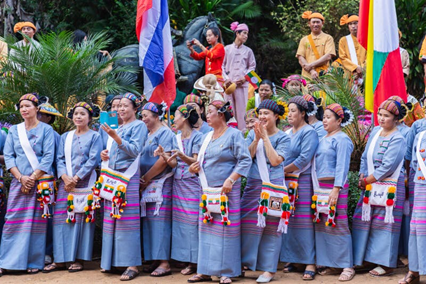
Photo Credit : dreamstime.com
Key Features of the Festival
The main event of Poy Ja Tee is the communal construction and decoration of sand pagodas at the local temple. These sand structures crafted with creativity and care are presented as offerings to the Buddha. However, the festival does not end here; there are also other activities for the locals and tourists to participate in for the whole day. By late morning, once the sand pagodas are complete, monks began chanting blessings and leading merit-making ceremonies. Participants offer food, flowers, and candles to the monks and Buddha and dedicate the merit to their family members as well as themselves. Following these religious rituals, the atmosphere shifts to communal celebration. The community shares meals and mingles, creating a lively atmosphere. In the evening, lanterns are lit up, illuminating the night sky. In some villages, the festival ends with a bung fai (บั้งไฟ) event where handmade rockets are launched into the sky. The bung fai event is a symbolic plea to the heavens for abundant rain for the upcoming planting season.
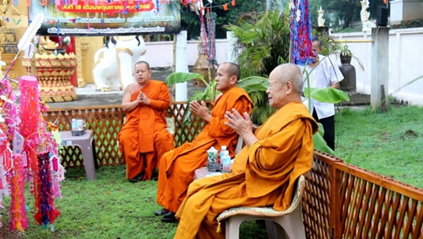
Photo Credit : dailynews.co.th
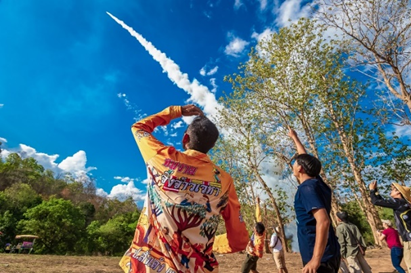
Photo Credit : siamrath.co.th
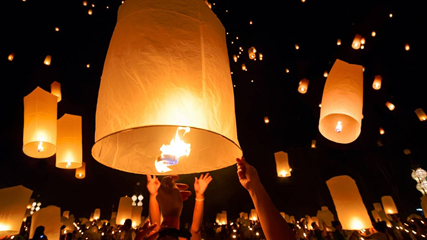
Photo Credit : thaipbs.or.th
Behind these lively activities are the Tai Yai Buddhist beliefs. The act of building and offering sand pagodas is an act of merit-making, believed to bring about individuals’ and the community’s well-being and prosperity. It is also seen as a way to ward off bad luck and mitigate the effects of one’s past negative karma. As the timing of Poy Ja Tee often coincides with the beginning of the rainy season, the locals also use this opportunity to pray for an abundant harvest and overall prosperity.
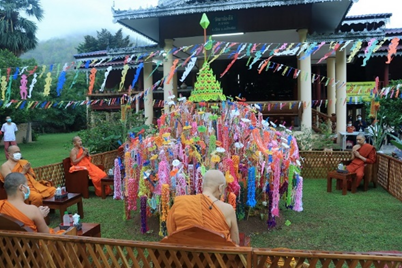
Photo Credit : meedeemedianews.com
The Values of Poy Ja Tee
The Poy Ja Tee festival of the Tai Yai people reflects both their deep-rooted spiritual values and the cultural values that shape their identity and way of life. By building and offering sand pagodas to the Buddha on Visakha Bucha Day, one of the most significant days for Buddhists, they express their reverence for the Buddha. Moreover, the event, along with the praying and food offerings to the monks, shows the commitment to making merit for both they themselves and others. These rituals also clearly exemplify Tai Yai’s belief in the importance of doing good deeds, making up for past wrongdoings, and inviting peace and prosperity into their lives.
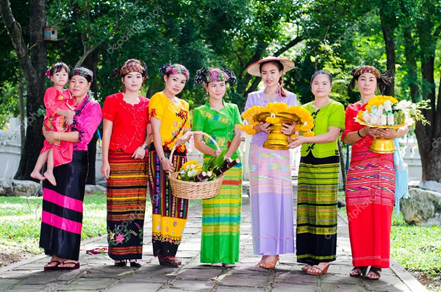
Photo Credit : depositphotos.com
Beyond its spiritual values, Poy Ja Tee is also a celebration of communal bonding. To prepare for such an important and lively event, villagers have to help each other gather sand, carry offerings, decorate the grounds, prepare meals, and sometimes hold a local food festival within the event. Young people, adults, and elders in the community work side by side, each contributing in their own way. This does not only strengthen social bonds between each generation but also reinforce a sense of unity and belonging. It also creates opportunities for the older generations to pass on their cultural knowledge, values, and traditions to the young. Most importantly, with the local people and authorities’ efforts to preserve this traditional festival each year, the Tai Yai ethnic identity and traditions are continually cherished and celebrated. In a world where many local traditions risk fading, Poy Ja Tee serves as an expression of Tai Yai’s heritage and a living practice that keeps their sense of identity alive.
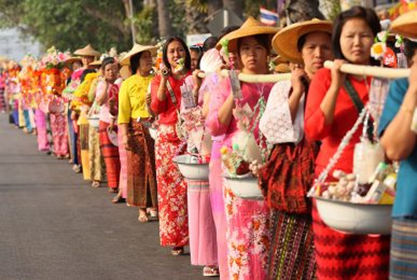
Photo Credit : maehongsonthailand.com
Lastly, the festival also indicates the broader cultural coexistence in Thailand where there are various ethnic groups, each contributing their unique traditions to the country’s multicultural society. While it is mainly rooted in Tai Yai tradition, Poy Ja Tee is appreciated and celebrated by both locals and visitors alike. The authorities, especially those in the Northern region, where many Tai Yai reside, also actively promote the festival to the wider public. This reflects Thailand’s openness and willingness to embrace and respect different beliefs and practices, making Thailand a place where people from different cultures can live together in harmony.
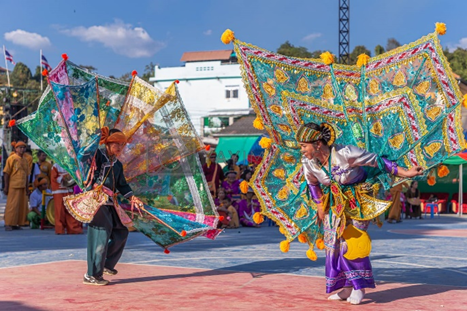
Photo Credit : yayimages.com
Conclusion
Poy Ja Tee is not just a colorful annual festival within a Tai Yai community. Beyond the fun of building sand pagodas, meeting up with neighbors, or launching a bung fai, this festival is a reflection of Tai Yai’s spiritual beliefs, values, and cultural identity that have been passed down for generations. In today’s ever-changing world, festivals like this remind us of the importance of communal bonding, cultural preservation, as well as cultural inclusivity. If you want to experience the festival during your visit in the Northern Thailand, go ahead. Poy Ja Tee is open to everyone. Joining in such a vibrant and unique festival certainly gives you more than just a good time. It gives you a chance to understand and appreciate the heart of Tai Yai way of life.
The story of Poy Ja Tee, or the Sand Pagoda Festival, offers a glimpse into the heart of Tai Yai culture. It reflects their deep Buddhist faith, strong community spirit, and pride in their identity. This annual festival keeps their traditions alive in today’s world. Join us as we continue to explore more stories from across Thailand and discover the rich diversity that shapes Thainess.
Source
- แสงปัญญา อ. (2023). การศึกษาประเพณีของชาวไทใหญ่ในชุมชนบ้านเวียงเหนือ อำเภอปาย จังหวัดแม่ฮ่องสอน . พิฆเนศวร์สาร, 19(1), 87–100. สืบค้น จาก https://so01.tci-thaijo.org/index.php/pikanasan/article/view/258039
- อภิชาต ภัทรธรรม. (2553). ไทยใหญ่. วารสารการจัดการป่าไม้, 4(7), 86-98.
- https://www.chiangmainews.co.th/social/2024476/#google_vignette
- http://www.m-culture.in.th/album/193276/%E0%B8%9B%E0%B8%A3%E0%B8%B0%E0%B9%80%E0%B8%9E%E0%B8%93%E0%B8%B5%E0%B8%9B%E0%B8%AD%E0%B8%A2%E0%B8%88%E0%B9%88%E0%B8%B2%E0%B8%95%E0%B8%B5%E0%B9%88_%E0%B8%AB%E0%B8%A3%E0%B8%B7%E0%B8%AD%E0%B8%87%E0%B8%B2%E0%B8%99%E0%B8%9A%E0%B8%B9%E0%B8%8A%E0%B8%B2%E0%B9%80%E0%B8%88%E0%B8%94%E0%B8%B5%E0%B8%A2%E0%B9%8C%E0%B8%97%E0%B8%A3%E0%B8%B2%E0%B8%A2
- https://www.dailynews.co.th/news/2345122/
- https://www.facebook.com/watch/?v=800325865110076

Author: Thanachporn Varapongsittikul
Uploaded on 24 September 2025