

Video Versions of the Article
For those who prefer to watch and listen, this article is also available in video format.
The videos are presented in both Thai and English, offering the same core insights through spoken reflection and guided explanation.
1. The Light of Wisdom
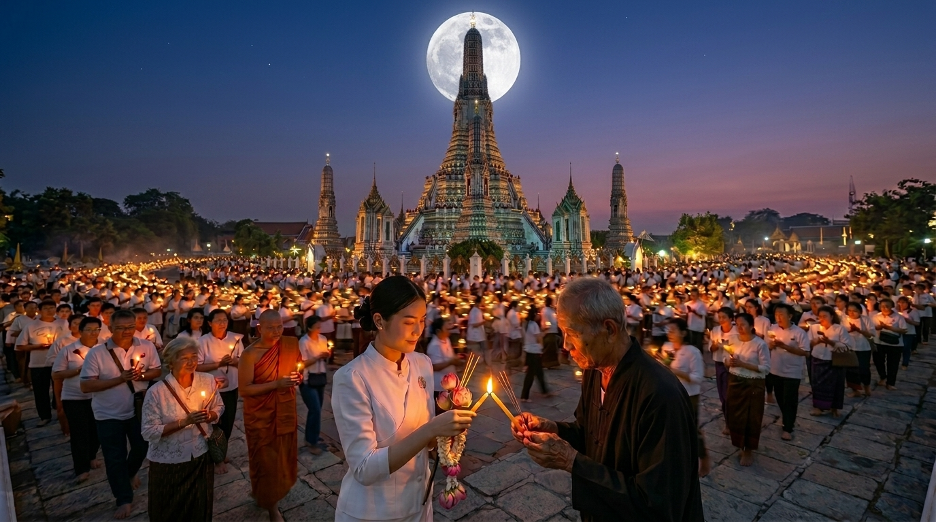
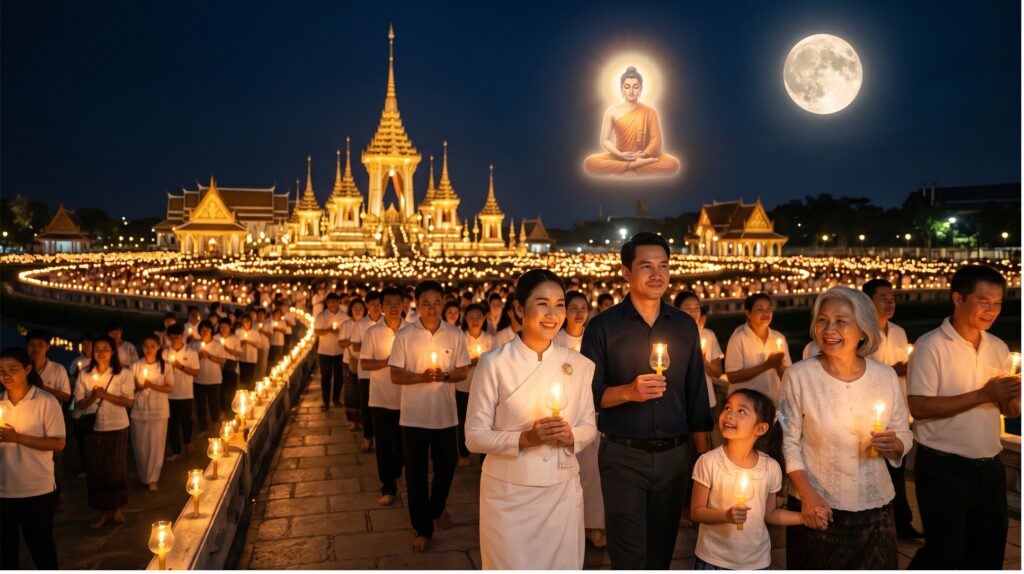
On the night of the full moon in the lunar month of Visakha (usually falls in May or June), a remarkable phenomenon unfolds in many parts of the world. As the sun sets, millions of people emerge into the gentle evening breeze, holding unlit candles, incense, and lotus flowers. Slowly, a single flame is passed from person to person, creating a growing ocean of warm, flickering light that pushes back the darkness. In majestic temples, quiet village shrines, and grand city centers, people from all walks of life walk mindfully in a serene procession, circumambulating sacred stupas and statues. This is Visakha Puja—a day of profound global stillness. Yet, this visually stunning ritual is not merely a display of ancient faith; it is the celebration of a solitary human being’s epic journey to decode the mysteries of the mind, leaving behind a timeless blueprint that continues to illuminate the path for humanity thousands of years later.
Building upon the foundational history of this sacred observance—which I previously explored in a 2022 article ‘Vesak Day: A Day to Commemorate the Buddha’ for the Thailand Foundation—this narrative seeks to delve deeper. It explores not just the history, but how the Buddha’s ancient discoveries continue to serve as a highly practical operating system for solving the challenges of our modern lives.
2. The Unbroken Tradition and National Identity
Visakha Puja, also known as Vesak, is the holiest day in the Buddhist calendar. While its roots trace back over 2,600 years to the ancient Indian subcontinent, this millennial tradition thrives vibrantly today in many Southeast Asian countries. The Buddha’s teachings, carried by monks, merchants, and kings, have embedded themselves deeply into the cultural and spiritual fabric of countless societies.
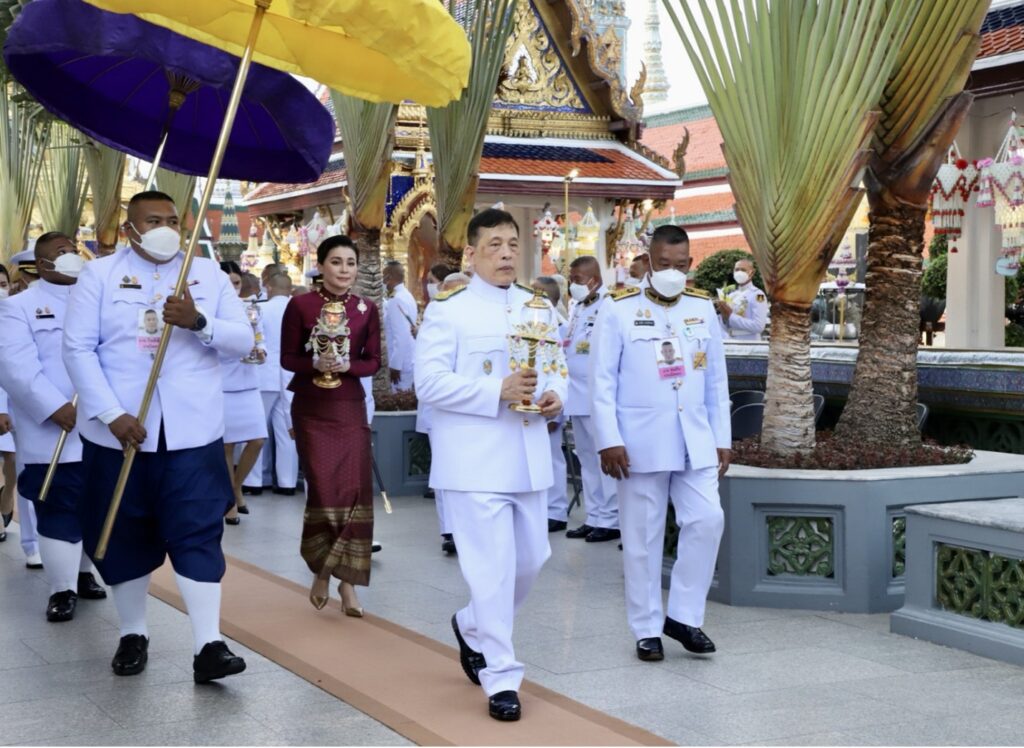
In Thailand, serving as a profound center for its continuous observance, Buddhism is not just a religion; it is a foundational pillar of the national identity. The observance of Visakha Puja here is elevated to the highest national level. Every year, His Majesty the King and members of the Royal Family meticulously preside over and participate in the royal Visakha Puja ceremonies at the Temple of the Emerald Buddha within the Grand Palace. The King leads the nation by lighting the royal candles and leading the Wian Tian (the candlelight circumambulation), a powerful symbol of the monarchy’s enduring role as the upholder of the faith. This royal participation bridges the ancient with the modern, demonstrating how deeply the Buddha’s legacy remains interwoven with the spiritual and cultural life of the Thai people.
3. Three Major Events in the Buddha’s Life behind Visakha Puja
Visakha Puja is a unique convergence of time. According to Buddhist tradition, three profound milestones in the life of the Buddha miraculously occurred on the exact same day—the full moon of the sixth lunar month. These are:
3.1 The birth of Siddhattha Gotama, the future Buddha

The journey began in the 6th century BCE at Lumbini (in modern-day Nepal), where Prince Siddhattha was born into the royal Shakya clan. Endowed with immense privilege, he was a child prodigy who mastered complex philosophies and martial arts. He lived in exquisite luxury, inhabiting three magnificent palaces designed for the changing seasons, completely insulated from the harsh realities of the world by a fiercely protective father. He had a beautiful wife, a newborn son, and the promise of a vast kingdom. Yet, the turning point of human history occurred when the prince stepped outside his palace walls and witnessed the “Four Sights”: an old man, a sick man, a corpse, and finally, a serene ascetic.
This encounter shattered his royal illusion. The prince realized a terrifying, universal truth: aging, illness, and death are inescapable for everyone. However, the sight of the calm ascetic offered a hypothesis—perhaps the mind could be trained to transcend this suffering. Driven by the resolve to find a path that ends suffering and leads to permanent happiness, Siddhattha made the ‘Great Renunciation. He left behind his kingdom and his family, plunging into the deep forests of India to seek the ultimate cure for the human condition.
3.2 Siddhattha’s Awakening or Enlightenment
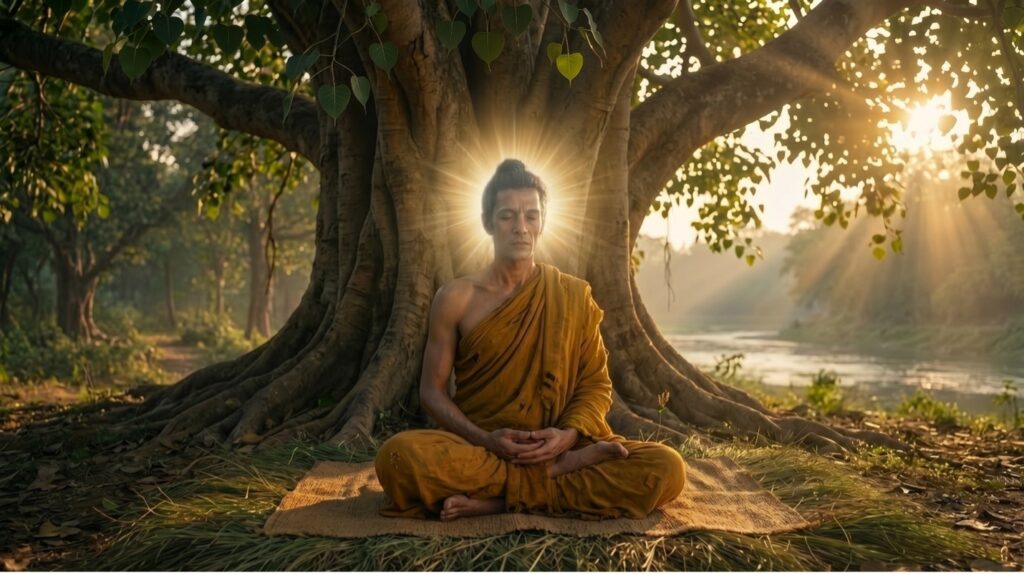
For six years, he tried to find a path to the end of suffering and the attainment of permanent happiness. He studied under the greatest meditation masters, mastering their techniques, but found they only offered temporary escapes. He then engaged in extreme asceticism, starving himself until he was near death, only to realize that torturing the physical body was a failed experiment. In a moment of profound clarity, he chose the “Middle Way”—nourishing his body to sustain a strong, focused mind.
Sitting beneath the Bodhi tree in Bodh Gaya, he shifted his approach entirely. He turned his awareness inward, using the profound stillness of meditation (Jhana) as a scientific tool to investigate the mechanics of his own mind. On the full moon night of Visakha, he pierced through the veil of ignorance, realizing the law of interconnectedness and the Four Noble Truths. He awoke, becoming the Buddha—the Enlightened One.
3.3 The Buddha’s Parinibbana (passing)
Following his supreme awakening, the Buddha did not keep this liberating knowledge to himself. For the next forty-five years, he walked tirelessly across the northern and northeastern Indian subcontinent. He engaged with mighty kings, sharp philosophers, and the poorest outcastes, sharing his discoveries with boundlessly compassionate equality.
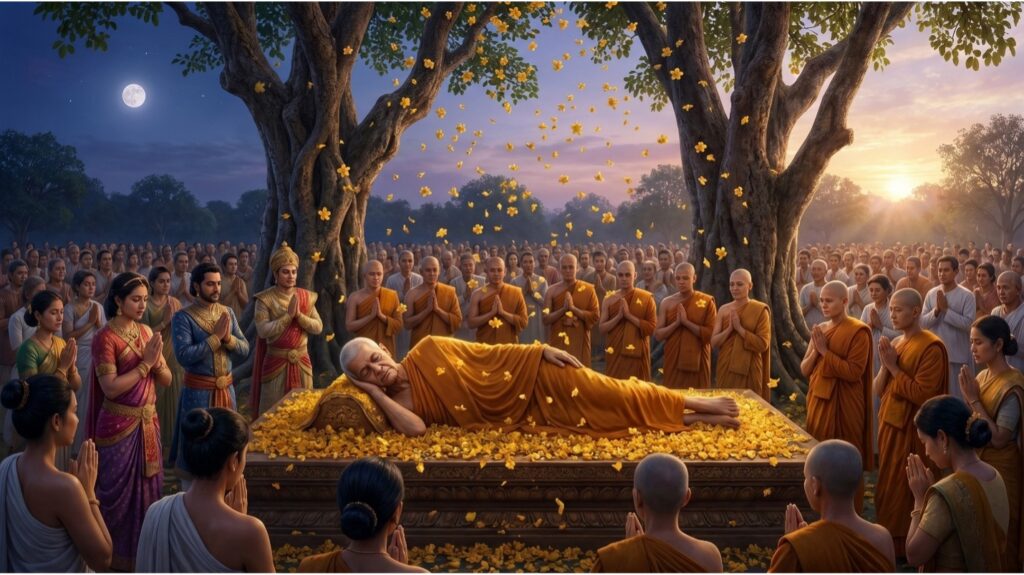
At the age of eighty, resting between two Sal trees in Kushinagar on another Visakha full moon, he passed into Parinibbana. His final words urged humanity to remember that all worldly things inevitably decay, and that we must work out our own liberation with diligence and mindfulness. He appointed no successor, declaring that the Dhamma (the truth and the teachings) would be their guide.
4. The Enduring Legacy: An Operating System for Humanity
The Buddha physically passed away, but the legacy he left behind is far more than a system of worship; it is a highly sophisticated, practical operating system for the human mind that remains astonishingly relevant today.
At the heart of this legacy are the Four Noble Truths, a timeless diagnostic model for solving any human crisis. The Buddha taught us to first objectively diagnose the problem (Suffering exists), identify its root cause (Craving and Ignorance), envision the clear goal (The end of suffering is possible), and meticulously apply the treatment plan (The Noble Eightfold Path). Today, this exact logical framework is mirrored in modern cognitive behavioral therapy (CBT) and corporate problem-solving strategies.
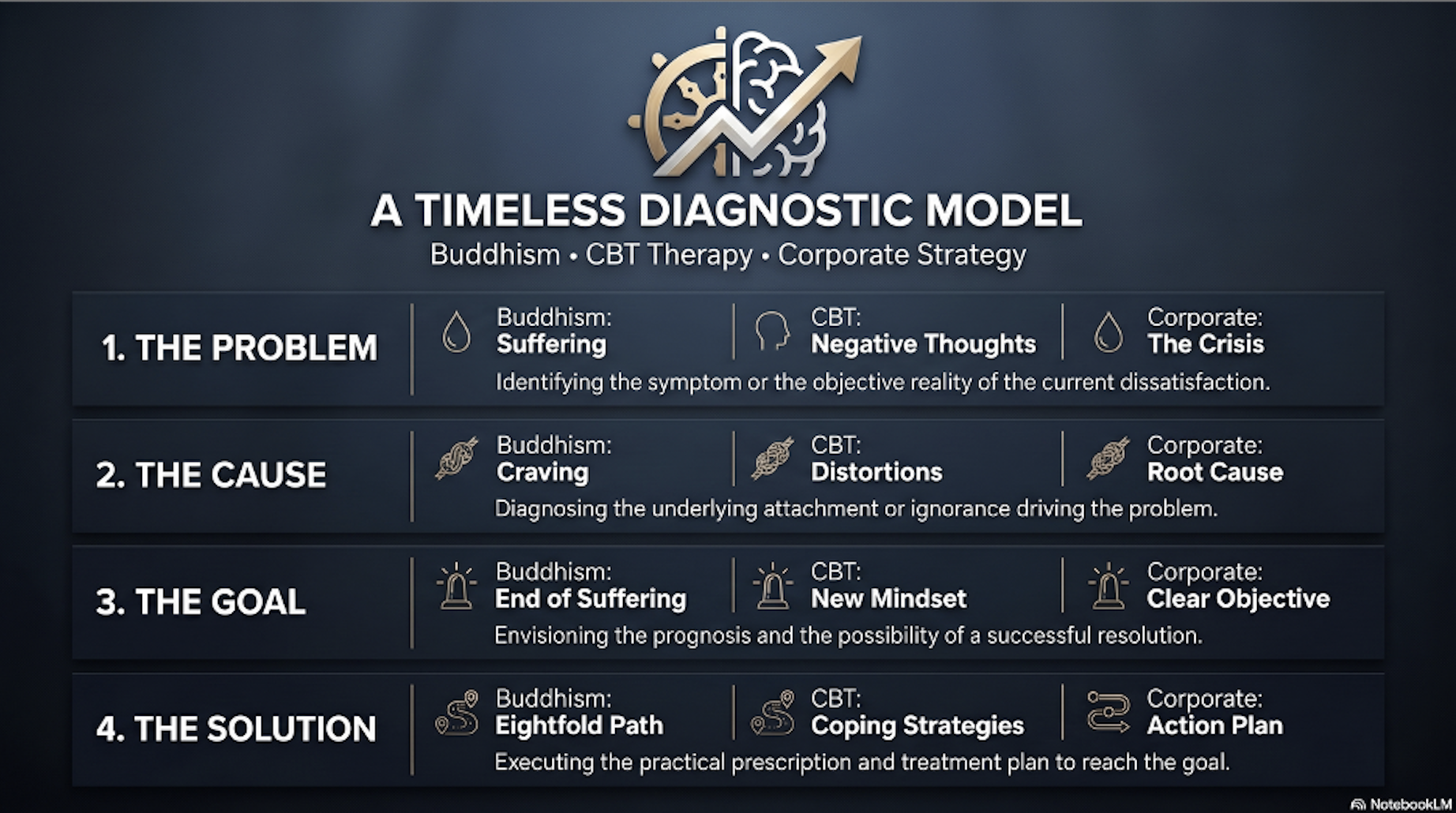
An AI-generated image comparing the Four Noble Truths, CBT, and Corporate Strategy as a diagnostic model.
The treatment plan—the Noble Eightfold Path—is a sustainable “Middle Way” for our modern world. It integrates wisdom, ethical conduct, and mental discipline. In an era plagued by burnout, environmental degradation, and social division, this path teaches us how to balance economic progress with ethical responsibility and personal well-being.
Furthermore, the Buddha’s insights into psychology and neuroscience were millennia ahead of his time. He taught that our deepest suffering comes not from the physical pains of life (the “first arrow”), but from our mental reactions to them—our anxiety, anger, and despair (the “second arrow”). His ultimate tool for stopping this second arrow was Satipatthana (Mindfulness). Today, modern neuroscience validates this. Clinical research demonstrates that practicing mindfulness and Metta (loving-kindness) physically rewires our brains through neuroplasticity. It shrinks the amygdala (the fear center) and strengthens the prefrontal cortex, reducing stress, enhancing emotional resilience, and empowering millions of workers, executives, and everyday people to anchor themselves in the happiness of the present moment.

His legacy is also one of profound social and intellectual liberation. In a deeply hierarchical society, the Buddha established spiritual equality, allowing women to ordain as Bhikkhunis (nuns) and recognizing their equal capacity for enlightenment. Furthermore, in the Kalama Sutta, he laid down the foundations of critical thinking, urging people not to blindly believe in authority, tradition, or rumors, but to verify the truth through direct experience—a mindset that is absolutely critical in our modern digital age of misinformation and fake news.
5. Perspectives from Giants of Modern Thought
The objective, scientific nature of the Buddha’s legacy has garnered immense respect from some of the greatest minds of the modern era.
Yuval Noah Harari, the renowned historian and author of Sapiens: A Brief History of Humankind, highlights Buddhism as a prime example of a “natural law religion.” Harari notes that unlike many belief systems that rely on a creator god or divine decrees to dictate human behavior, the Buddha discovered the objective, natural mechanics of the mind. He simply observed the law of nature: craving inherently leads to suffering, and mindful awareness is the key to lasting peace. It is a system based on psychological cause and effect, available to anyone willing to observe their own consciousness.
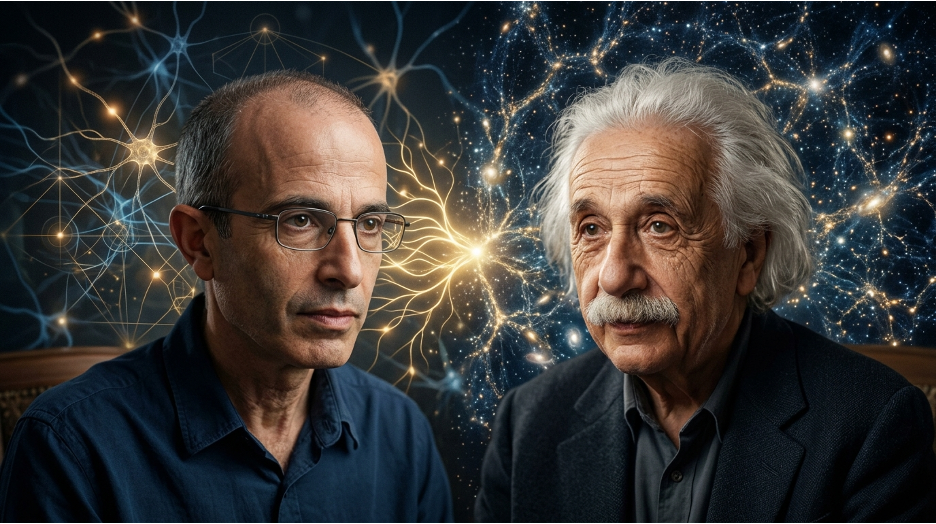
Similarly, Albert Einstein, the father of modern physics, saw in Buddhism a profound intersection with the scientific worldview. In his 1930 article “Religion and Science” for The New York Times, Einstein discussed the evolution of human spirituality, culminating in what he called a “cosmic religious feeling.” He noted that the Buddha exemplifies a religious personality of the highest order, and that Buddhism strongly embodies this cosmic feeling. For Einstein, this was a state where an individual transcends the illusion of the separate ego, realizing the beautiful, unbroken harmony of the universe. The Buddha’s ancient realization of Idappaccayata (interconnectedness)—that humanity, nature, and the cosmos are bound in a delicate, interdependent web—perfectly echoes the modern scientific understanding of the “Cosmic Web.”
6. Global Recognition by the United Nations
The universal applicability and profound peacefulness of the Buddha’s teachings eventually led to the highest level of global recognition. In December 1999, the United Nations General Assembly adopted Resolution 54/115, officially recognizing the Day of Vesak (Visakha Puja) as an international day of observance.
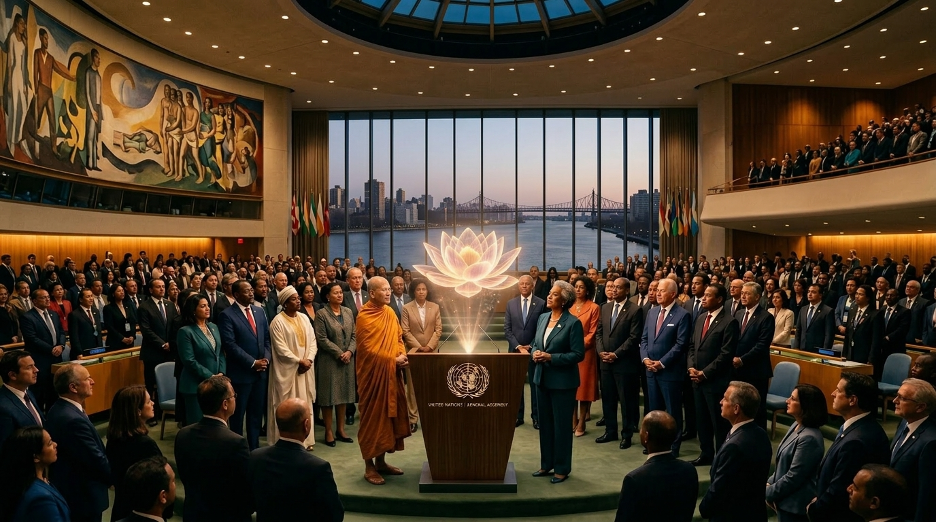
The United Nations acknowledged this day not to promote a specific religion, but to officially recognize the tremendous contribution that Buddhism, one of the oldest religions in the world, has made for over two and a half millennia to the spirituality of humanity. The UN recognized that the Buddha’s core teachings of compassion, non-violence, equality, and mindful living are perfectly aligned with the UN’s own goals of fostering international understanding, human rights, and global peace. Since then, international observances are held annually at UN headquarters in New York and other UN offices worldwide, uniting global leaders in reflecting on these timeless values.
7. Conclusion: A Day of Profound Gratitude
Ultimately, Visakha Puja is a day defined by the Buddhist virtue of Kataññu—profound gratitude. As the sea of candlelight encircles temples on this sacred full moon night, we are not mourning a historical figure who passed away long ago. Instead, we are expressing our deepest gratitude to the Buddha for the magnificent, living legacy he left behind.
He endured the hardships to find a path leading to the end of suffering, and thus permanent happiness so that we would not have to wander blindly. He diagnosed the human condition and provided a map out of the suffering. Visakha Puja reminds us that the Buddha’s teachings are not an archaic relic, but a highly functional toolkit for living beautifully in the 21st century.
Whether we are facing the complexities of modern careers, navigating the turbulent waters of relationships, or seeking to build a more just and sustainable global society, we can infinitely draw upon his wisdom. By cultivating mindfulness, practicing loving-kindness, and understanding the profound interconnectedness of all life, human beings today can continue to utilize the Buddha’s legacy to build genuine happiness, achieve meaningful success, and foster a world of endless harmony and mutual support. The light of Visakha, kindled 2,600 years ago, continues to burn brightly, illuminating the path forward for all of humanity.
8. References
- Desbordes, G., Negi, L. T., Pace, T. W., Wallace, B. A., Raison, C. L., & Schwartz, L. (2012). “Effects of mindful-attention and compassion meditation training on amygdala response to emotional stimuli in an ordinary, non-meditative state.” Frontiers in Human Neuroscience, 6, 292. (Scientific validation on how compassion/Metta meditation rewires the brain and reduces amygdala activation).
- Einstein, A. (1930). “Religion and Science.” The New York Times Magazine, November 9, 1930. (Einstein’s observation of the “cosmic religious feeling” and Buddhism).
- Harari, Y. N. (2014). Sapiens: A Brief History of Humankind. Harvill Secker. (Discussion of Buddhism as a religion based on natural laws and objective mental mechanics).
- Jayasaro, Ajahn. (2013). Without and Within: Questions and Answers on the Teachings of Theravada Buddhism. Buddhadasa Indapanno Archives. (A comprehensive guide answering fundamental questions about Buddhist teachings, mindfulness, and the practical application of the Dhamma).
- Lazar, S. W., Kerr, C. E., Wasserman, R. H., Gray, J. R., Greve, D. N., Treadway, M. T., … & Fischl, B. (2005). “Meditation experience is associated with increased cortical thickness.” NeuroReport, 16(17), 1893–1897. (Neuroscientific research demonstrating neuroplasticity and the strengthening of the prefrontal cortex through meditation).
- Soma Thera (Trans.). (1981). Kalama Sutta: The Buddha’s Charter of Free Inquiry (AN 3.65). Buddhist Publication Society. (The Buddha’s teaching on critical thinking and verifying truth through direct experience).
- Thanissaro Bhikkhu (Trans.). (1997). Sallatha Sutta: The Arrow (SN 36.6). Access to Insight (BCBS Edition). (The core teaching on differentiating between physical pain — the first arrow — and mental suffering — the second arrow).
- United Nations General Assembly. (1999). Resolution 54/115: International recognition of the Day of Vesak at United Nations Headquarters and other United Nations offices. (The official UN declaration recognizing Visakha Puja).
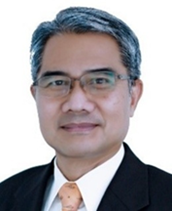
Author: Paitoon Songkaeo, Ph.D.
Transitioning from a Buddhist monk to a diplomat, Paitoon Songkaeo is the Administrative Director of the Thailand Foundation. With a background of 16 years as a Buddhist monk, he later joined the Ministry of Foreign Affairs and retired as the Consul-General of Kota Bahru, Malaysia, in 2017.