


Ruean Thai (เรือนไทย) are Thailand’s traditional wooden houses built by Thai locals with locally sourced materials and techniques based on folk knowledge. As Bernard Rudofsky, author of Architecture Without Architects: A Short Introduction to Non-Pedigreed Architecture, suggests, Ruean Thai can be understood as vernacular architecture – in other words, buildings influenced by local resources, climate, and ways of life. Traditional Thai houses embody a holistic worldview that values harmony with nature, communal living, and spiritual beliefs. Across Thailand’s four regions, people developed distinctive architectural styles. As interest in vernacular architecture is growing and its principles are increasingly informing modern architectural practice, in this article, we will explore the key components of vernacular Thai houses and the regional variations found across the country.
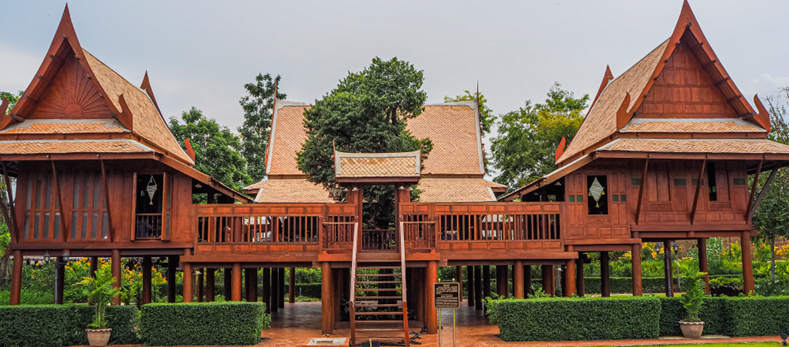
Photo credit: Kasikorn Bank
Why do traditional Thai houses look this way?
The signature features of any Ruean Thai include “raised floors” which protect the home from seasonal flooding and allow wind to pass beneath the structure during the monsoon season, “pointed gable roofs” where only two sides are tiled while the untiled side acts as a windbreak board called panlom (ปั้นลม), and “grouped layout” known as Ruean Mu (เรือนหมู่) or cluster house, formed by adding buildings according to function and financial capacity. A newly established family, for instance, might begin with a single-bedroom structure and, as resources grow, add a kitchen and other rooms, all linked by a shared veranda called chaan (ชาน).
Raised floors and open spaces
Traditional Thai houses stand on stilts at least two meters above the ground. The shaded underfloor called tai thun (ใต้ถุน) becomes a versatile space since it is cool enough for daily living in the hot season and practical for storing farming tools, weaving materials or simply resting. Movable stairs are placed outside the main structure so they can be lifted and secured at night. Extending from the upper floor is the veranda called chaan, often covered with a roof and used as a lounge or open-air kitchen where wooden planks are laid about one centimeter apart to allow rainwater to drain through.
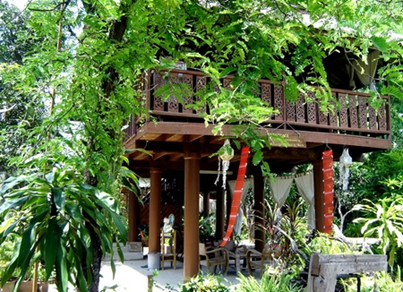
Photo Credit : baanstyle.com
Ruean Mu Arrangement
A Thai house cluster, or Ruean Mu (เรือนหมู่), consists of several separate buildings connected by the chaan (ชาน). This layout reflects the social structure of central Thai families, where a house often begins as the bridal home of a newly formed nuclear family. Initially, the structure is small, consisting mainly of a bedroom and a hall. As the family grows when children marry and spouses move in, additional houses are built and linked by the chaan. Over time, this creates a compound of multiple houses connected by a continuous shared platform.
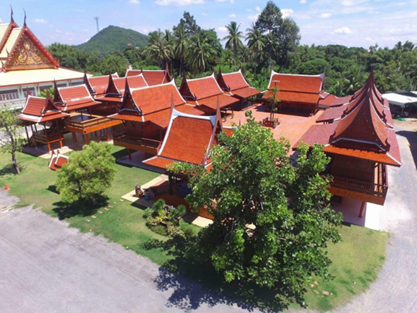
Photo Credit : kruachieve.com
High Slanted Roofs
The roofs are sharply pitched to help shed monsoon rain, reduce heat, and enhance airflow by allowing hot air to rise and cooler air to move downward. Their form also expresses elegance and lightness in Thai aesthetics. Roofing materials vary. Temporary structures may use thatched grass or bamboo while permanent ones employ terracotta or wooden tiles.
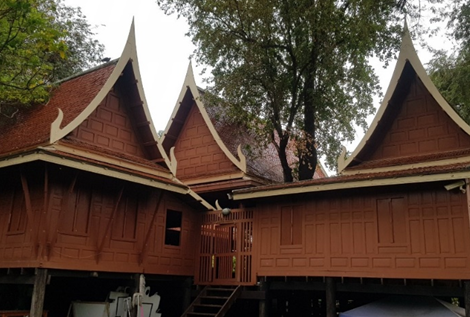
Photo Credit : Department of Fine Arts
The three main tile types are kap kluay (กาบกล้วย) or banana-trunk tiles which are half-cylindrical pieces resembling banana bark, kled tao (เกล็ดเต่า) or turtle-shell tiles which are square flat tiles with sharp corners, and hang yiao (หางเยี่ยว) or falcon-tail tiles, similar to turtle-shell tiles but with curved up corners.
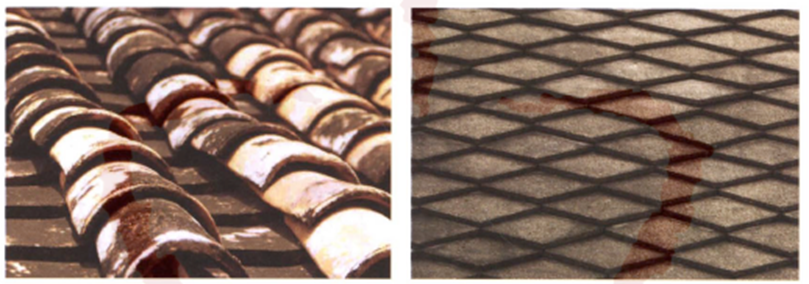
Photo Credit : Museum Siam
Handcrafted Joinery for Walls
Walls built with joinery and without nails, known as Ruean Khrueang Sab (เรือนเครื่องสับ), can be dismantled and relocated with ease. Using hardwood, craftsmen carve, cut, drill, or hollow each piece before assembling them with dowels or bolts, a process requiring significant skill.
Joinery styles for house walls include fa pakon (ฝาปะกน), which creates a brick-like pattern of vertical and horizontal lattices, fa sai bua (ฝาสายบัว), where horizontal lattices are hidden, forming clean vertical stripes like lotus stems, and fa lai (ฝาไหล), a double-panel wall designed to slide open and closed. Fa khat tae (ฝาขัดแตะ), woven from bamboo or rattan, though not hardwood is considered a joinery form as well and suits kitchens and areas that require ventilation.
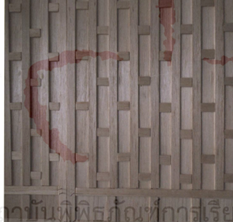
Photo Credit : Museum Siam
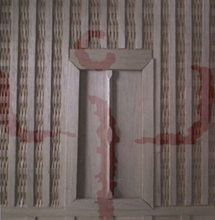
Photo Credit : Museum Siam
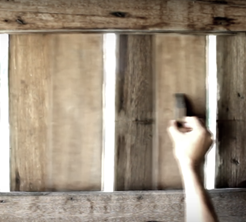
Photo Credit : Lanna Magazine on Cloud
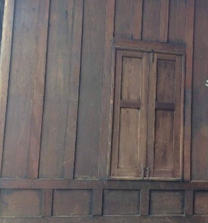
Photo Credit : RueanThai Expert by Rong Tong
A simpler construction method is Ruean Khrueang Phook (เรือนเครื่องผูก), which uses bamboo frames tied with bamboo strips, rattans, or ropes. These hut-like houses are quick to build, easy to repair, although their short lifespan and modest appearance reflect the homeowner’s limited financial means.
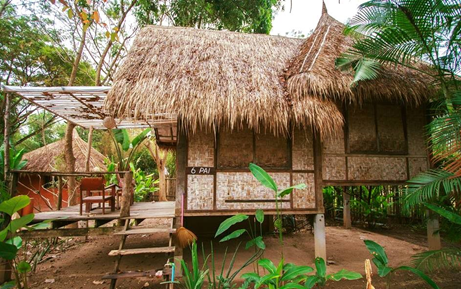
Photo Credit : Love Farm
Ventilation and Climate Control
Natural ventilation is essential. The open chaan, broad eaves, movable wooden shutters (fa lai), and airy woven walls (fa khat tae) keep interiors cool. Builders traditionally choose native materials like teak wood, shorea wood, makha wood, and rosewood for structure requiring hardwood, and softer materials such as thatch grass or palm leaves for roofing because they release heat quickly. Floor plans typically emphasize openness, enclosing only essential rooms, such as those for daughters or parents. In some communities, sons do not have private rooms and instead sleep in the lounge area.
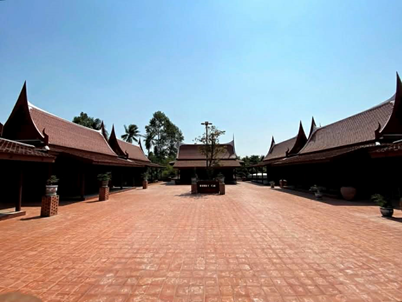
Photo Credit : kruachieve.com
Historical Roots of Ruean Thai
Archaeological evidence and early settlements show a long continuity of elevated wooden structures in Thailand. Thai houses, over time, developed their familiar form: raised on stilts to guard against wild animals and floods and topped with pointed gable roofs to shed heavy rain. These features reveal a practical understanding of the tropical climate synonymous with monsoon winds, intense rainfall, and hot, humid conditions.
Unfortunately, bamboo, the earliest building material, decays quickly, and little physical evidence of early houses survives while more durable brick-and-mortar structures were largely reserved for palaces and religious sanctuaries. Still, clearer evidence of elevated Thai houses appears around the 13th century, visible in bas-reliefs and descriptions by foreign visitors in the Ayutthaya period (1350-1767).
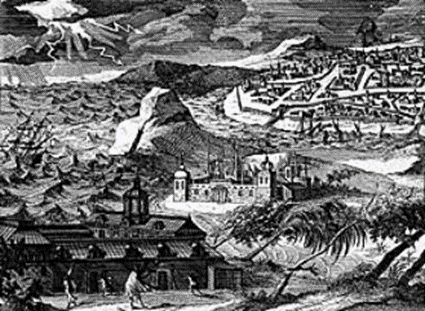
Photo Credit : ayutthaya-history.com
Accounts attributed to the Dutch merchant Joost Schouten (1600-1644) note that riverbank houses stood about six feet above the water to avoid floods. During the reigns of King Songtham (1611-1628) and King Prasat Thong (1630-1656), common Siamese houses were said to be built of wood or bamboo and typically raised three to four feet above the ground. Most had a single door and several windows with minimal furnishings.
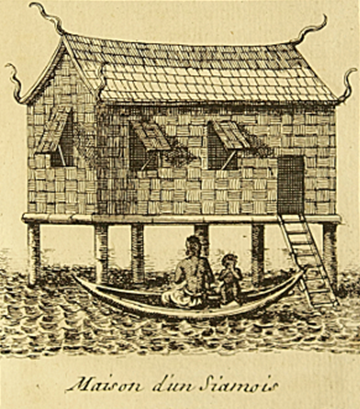
Photo Credit : camillesourget.com
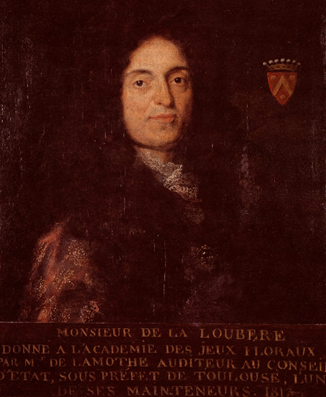
Photo Credit : upload.wikimedia.org
In 1690, the German naturalist Engelbert Kaempfer (1651-1716), traveling on a Dutch ship, described commoners’ houses as simple bamboo huts with plank floors and rough thatched roofs.
In the chronicles of Simon de la Loubère (1642-1729), early houses were built almost entirely from bamboo. Pillars, floors, and walls rose roughly thirteen feet above ground level, with bamboo stairs providing access. Later, hardwood replaced bamboo for pillars and floors while the walls and gables became more permanent. These developments marked the early evolution of houses for the ruling class. Guest houses also stood on stilts with floors covered with fine woven mats. Reception halls and rooms were decorated with patterned fabrics and white muslin ceilings, and ambassadors’ quarters were carpeted with mats and kept remarkably clean and orderly.
Superstitions
Auspicious timing is essential when setting a house’s main pillars. Traditional Thai houses typically have eight pillars, arranged in a vertical rectangle. The first pillar, set at the lower left corner, is the main pillar or sao ek (เสาเอก), and its placement must follow strict astrological calculations. The remaining pillars are then set in clockwise order, with the second pillar known as sao tho (เสาโท) and the rest are sao tri (เสาตรี).
Stairs are usually built with an odd number of steps as even numbers are traditionally reserved for spirits.
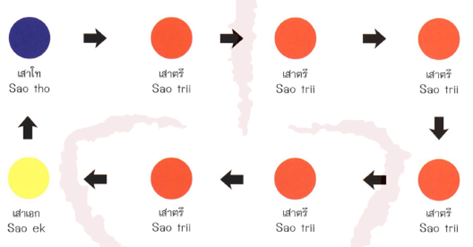
Photo Credit : Museum Siam
Regional Styles of Thai Houses
Let us now explore the traditional houses of Thailand’s four regions: North, Northeast, Central, and South.
Northern Thailand – Lanna Houses or Ruean Thai Yuan
Much of northern Thailand was once part of the Lanna Kingdom, which developed its own architectural traditions. Northern Thai houses are usually built as twin houses, with lower, denser, and thicker roofs than houses in other regions. Their expansive roofs with long overhanging eaves cover most of the structure. Few windows and outward-flaring walls help retain warmth in cooler seasons. Ventilation is provided by fa lai (ฝาไหล), sliding wooden wall panels. The house includes a tern (เติ๋น), a semi-open, multi-purpose living space located between the enclosed rooms and the signature Thai open-air veranda, chaan.
The most prominent house type is the Ruean Kalae (เรือนกาแล), featuring elaborate carved wooden kalae ornaments atop their gables. Built primarily from locally abundant teak and traditionally for wealthy families or community leaders, these dwellings follow careful construction planning.
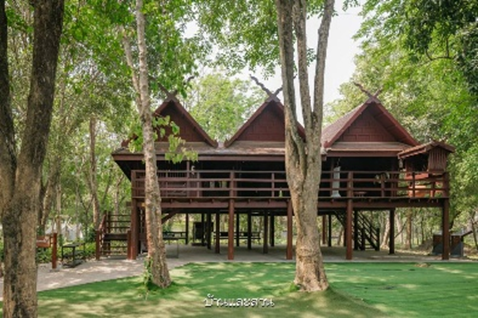
Photo Credit : baanlaesuan.com
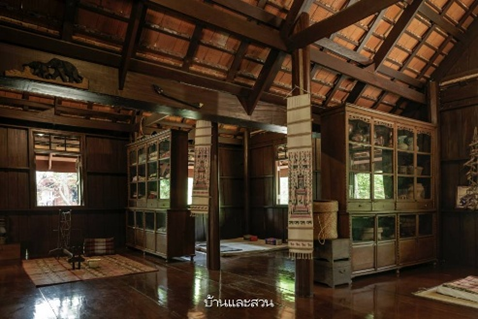
Photo Credit : baanlaesuan.com
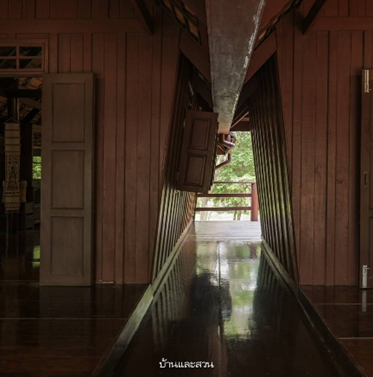
Photo Credit : baanlaesuan.com
Key Features:
- Carved wooden crossed-gable ornament, kalae, decorated at the top of the roof
- Lower stilt height than Central Thai houses, yet still raised
- Large roof with long eaves covering most of the structure
- Terracotta tiles or wooden tiles called pan kled (แป้นเกล็ด)
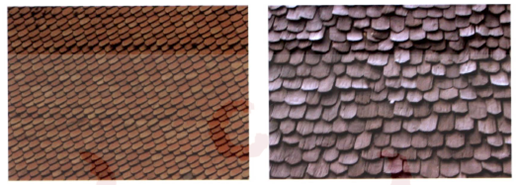
Photo Credit : Museum Siam
- Few windows and outward-slanting walls to keep the interior warm
- Sliding wooden walls, fa lai, for airflow
- A semi-open tern area used as a multipurpose space
Northeastern Thailand – Isan Houses (Huean)
Isan houses strongly reflect Lao heritage and rural farming lifestyles. Shaped by the region’s relatively arid climate, these homes respond to the needs of farming communities that often work far from their main villages. When families cultivate fields near distant water sources and cannot return home within a day, they build temporary or seasonal dwellings. This mobility has led to houses that can be easily dismantled and relocated without disrupting the main structure.
The orientation of the house follows the belief that its long side should run parallel to the sun, as placing it across the sun is considered inauspicious. In practice, this belief also serves a practical purpose: it reduces heat, since the long walls avoid direct sunlight for most of the day.
Isan houses have a high underfloor (tai thun) space and small windows to resist strong winter winds. With a single entrance and few openings, the interior is relatively dark. The roofs usually lack eaves. Interiors are unpartitioned, divided into three zones: the parents’ bedroom, the children’s bedroom, and a lowered open terrace used for receiving guests. When a daughter occupies a room, however, a temporary partition provides privacy.
Kitchens are usually housed in a separate building called Huean Fai (เฮือนไฟ), meaning a fire room. Roofs slope more gently than in other regions and often feature carved sun motifs called Lai Tawan, reflecting religious belief.
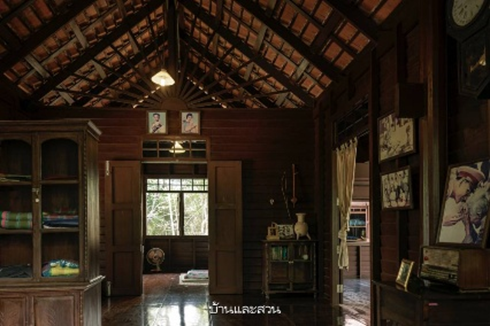
Photo Credit : baanlaesuan.com
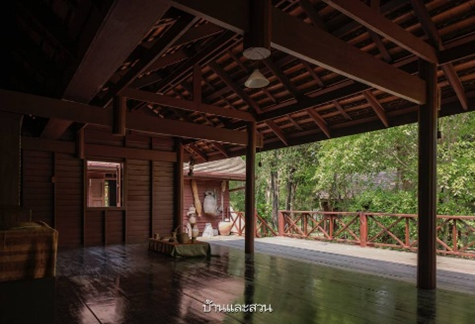
Photo Credit : baanlaesuan.com
There are three main types of Isan houses:
- Huean Goey (เฮือนเกย) – A single house with one side of the roof extended over a living platform called Goey.
- Huean Faed (เฮือนแฝด) – Twin houses sharing a single roof structure; one serves as the main sleeping quarters (huean yai) while the other connects to the Chaan and may have only three walls.
- Huean Khong (เฮือนโข่ง) – Two separate houses connected by a central covered walkway. These are portable structures that can be dismantled and rebuilt elsewhere.
Key features
- Lower roof pitch
- Frequent sunburst carvings (Lai Tawan)
- Separate kitchen building
- Designed for mobility due to seasonal changes and agricultural lifestyles
Central Thailand – Classic Ruean Thai
Central Thai houses developed in the fertile river-basin plains at the heart of the country, where abundant natural resources allowed for a wide variety of house forms, both single and clustered. Although stylistic variations exist, Central Thai houses share characteristic features: wooden structures raised on stilts for flood protection, a multipurpose tai thun for daily activities or raising animals, and a high gable roof to reduce heat. The gables are decorated with two distinctive wooden windbreak boards: ngao (เหงา) and hang pla (หางปลา), and a wide chaan unites different buildings into one.
Central Thai houses are closely associated with classical Thai aesthetics and the lifestyle of the former Siamese aristocracy. The region’s ethnic diversity also led to many local variations. However, there is one notable feature that we would like to point out here. As you can see, all traditional Thai houses are strictly single-story. This is not due to technical limitations but to a spiritual belief: the head is considered the sacred dwelling of the khwan (life spirit), and it is therefore inauspicious for anyone to be positioned above another’s head. Even when later houses were constructed with brick and mortar, traditional Thai houses remained single-story in accordance with this long-standing tradition.
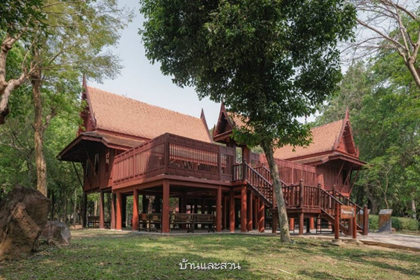
Photo Credit : baanlaesuan.com
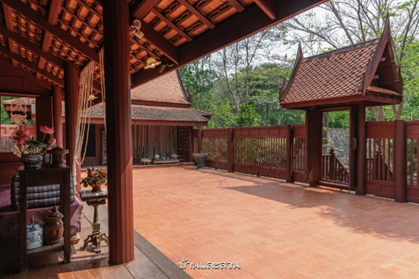
Photo Credit : baanlaesuan.com
There are two main types of Central Thai houses:
- Single-house unit: A compact dwelling for a small family, consisting of one sleeping house and a detached kitchen connected by a Chaan. Because of its small scale, it is typically built using the Khrueang Phook technique (tied bamboo construction).
- Cluster house (Ruean Mu): A compound of multiple buildings connected by a shared Chaan. This includes the parents’ main house and separate sleeping houses for married children. In wealthy households, a grander layout was preferred. In addition to bedrooms, such compounds included a central hall as a lounge, a bird veranda for keeping birds, and a prayer room for enshrining Buddha images. The construction of a cluster house requires the Khrueang Sab technique which securely joins different pieces of hardwood without the need for nails and allows for convenient disassembly and reassembly.
Key features:
- High stilts for flood protection
- Hardwood construction using the khrueang sab technique
- Bamboo construction using the khrueang phook technique
- High curved gable roofs
- Decorative gable elements, such as windbreaks called panlom
- Large shared chaan as common living area
Southern Thailand – Muslim and Buddhist Houses
Southern Thailand has a distinct geographical setting. As a long peninsula surrounded by the sea, the region experiences a harsher rainy climate with high humidity and strong monsoon winds; thus, steeply sloping roofs to drain heavy rainfall. House pillars rest on a stone or cement base, instead of being buried in the ground, to prevent moisture damage. Ventilation vents are placed above doors. Ceilings are omitted to ensure constant airflow.
House structures are assembled on the ground before being lifted into position, a technique that allows entire structures to be relocated easily just by removing heavy components such as walls and roofing. Permanent fences are uncommon. Instead, fruit trees like coconut, jackfruit, and banana, define boundaries. Houses are usually oriented to face both land and water routes, enabling them to receive cooling breezes from both directions.
Southern Thailand is culturally diverse, home to Thai Buddhists and Thai Muslims. Each group maintains distinct traditions, with Thai Muslim houses showing a strong influence from northern Malaysia.
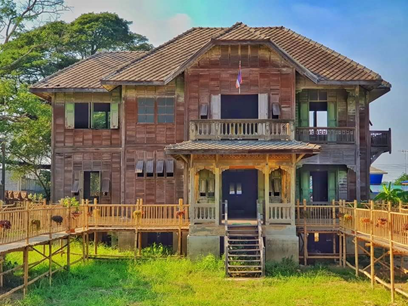
Photo Credit : BaanVaithayaphak
Two house types:
Southern Muslim Houses
Spatial organization in Southern Muslim houses reflects Islamic values of privacy and gender separation, reflecting strong Malay-Islamic influence. Interior space is divided into four main zones: the reception area at the front (where guests remain unless invited further), the central prayer area, and the kitchen, and women’s quarters at the rear. To accommodate gender separation according to the religious norm, houses often have two staircases: the front stairs for men and guests, and the rear stairs for women. A designated prayer space is also required as daily prayers are performed five times a day.
The roof is an iconic part of Southern Muslim houses. Common types of roof include:
- Lima or Panya (ปั้นหยา) is a hipped roof with five ridges (the word lima means “five”), distinctive to the South and especially common in Pattani Province.
- Manila or Blano (บาลานอ) is a hybrid hipped-gabled roof influenced by Dutch architecture (Blano meaning “Dutch”). Gables are richly decorated with carved wood and stucco patterns, often stamped or beaten into sun motifs.
- Gable or Melayu is known locally as Mae Lae (แมและ). This gable roof shows influence from Central Thai houses but differs in its winged windbreak, reflecting Malaysian design traditions.
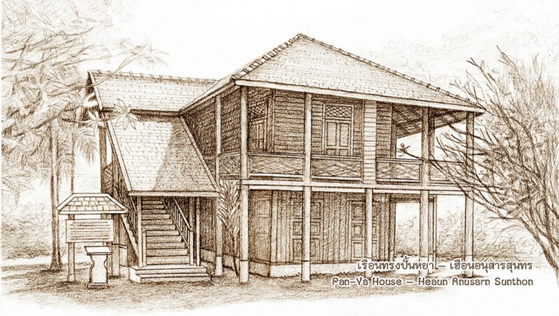
Photo Credit : accl.cmu.ac.th
Key Features:
- High stilts, though the Tai Thun space is less used than in Central Thailand
- One long open interior space with minimal partitions and function-based zoning
- Separate rear staircase for women
Southern Buddhist Houses
Southern Buddhist houses resemble Central Thai houses in form and layout but are typically smaller and lower. The roof is mixed between the gable and the panya styles. Unlike Muslim houses, the interiors are more fully enclosed, with fewer open areas. Because of year-round rainfall and strong coastal winds, these houses are usually without balconies since wind-driven rain can damage exposed platforms. Windows are often absent; instead, lattice walls provide ventilation while preventing interior stuffiness. Floor plans commonly include at least two-level changes between the chaan and the main hall. All houses have front entrance stairs, while secondary exit stairs from the kitchen lead down the side of the house.
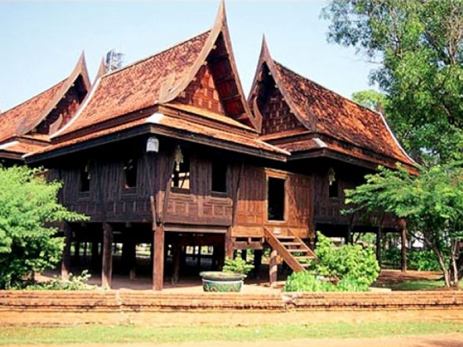
Photo Credit : accl.cmu.ac.th
Key Features:
- High-raised wooden structures
- More enclosed, partitioned rooms than Muslim houses
- Large roofs, often combining Panya and gable forms
- Central hall connecting rooms
Houses of Ethnic Groups in Thailand
Ethnic groups living and settling in Thailand since the Ayutthaya period (1350-1767), built houses infused with Thai architectural influences while Thai houses also absorbed these cultural ideas.
Lanna: Northern Thai houses feature intricate carved woodwork, especially the distinctive kalae (กาแล), a wooden ornament atop the gable roof. Lanna beliefs also emphasize a complete household compound, which traditionally includes a well, a mortar and pestle, a rice barn, and a kitchen with a wood-burning stove.
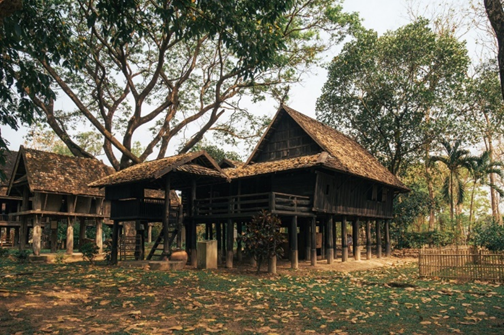
Photo Credit : bloggang.com
Malay: In the south of Thailand, Thai Muslim communities adopted architectural characteristics from Malaysia. These “Thai Muslim houses” reflect shared regional forms and include spaces designed to accommodate Islamic religious practices.
Mon: The Mon people migrated to Thailand in two major waves, in 1776 during the Thonburi period and in 1826 in the reign of King Rama III, and established settlements in Nakhon Ratchasima province. Their traditional houses informed their new home in Thailand called “Korat Thai houses” (เรือนไทยโคราช), typically featuring three bedrooms with an acute gable roof sharper than 50 degrees.
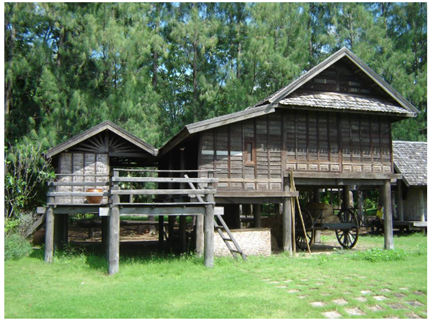
Photo Credit : Korat Museum
Khmer: The construction of Khmer style houses reflects enduring beliefs in auspiciousness. Pieces of sacred cloth or yantra meant to bring good fortune are placed at the front of the house from the very beginning of construction. Belief in lucky numbers also governs material dimensions, quantities, and proportions, such as the number of steps, and the width and length of the house.
Tai–Lao: The Tai–Lao people are the common ancestors of today’s Thai–Isan population in Northeastern Thailand. Three shared cultural traits link them: the Tai–Lao language, the cultivation of sticky rice, and the tradition of building houses on stilts. Houses are typically built close together, forming compact villages. Permanent fences are avoided, reflecting the belief that good neighbors should remain connected rather than divided.
Tai Song Dam: The Tai Song Dam, also known as Lao Song and recognized for their traditional black clothing, thus the word “Dam” meaning the color black in Thai, originated in northern Vietnam and relocated to Thailand. Their houses are built on high foundations and low-sloping walls, a distinctive feature adapted from their cold-climate origins, where sloped walls helped block cold winds. The gables are adorned with crossed, antler-like wooden carvings called kho kut (ขอกุด).
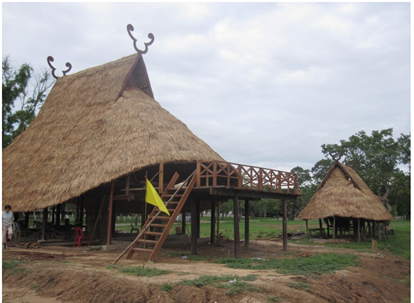
Photo Credit : Maha Chakri Sirindhorn Anthropology Centre
Victorian Gothic influence (1860-1870): During the reign of King Rama V (1868-1910), “gingerbread houses” became popular under the influence of Victorian Gothic revival architecture. The style incorporated Queen Victoria’s preference for lace, translated into delicate wooden fretwork on building exteriors. The ornate wood patterns resemble the decorative icing of the Christmas “gingerbread” cookies enjoyed in Europe.
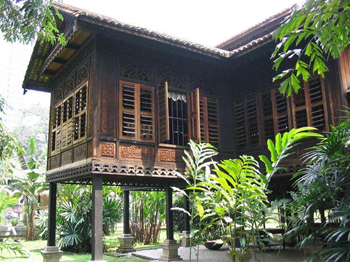
Photo Credit : Tomp Soda
Traditional Houses as Reflections of Thai Culture and Values
Adaptation to nature rather than overcoming it
Raising the house on stilts protects it from floods, wild animals, and ground moisture while allowing air to circulate beneath the floor. The shaded tai thun space becomes a multipurpose area for work, storage, rest, or keeping animals. This design reflects the Thai worldview of living with nature rather than dominating it.
Community-oriented living
The ruean mu or cluster house embodies extended family life and mutual support. As families grow, new houses are added and connected by the shared chaan and courtyards, encouraging daily interaction across generations. This layout reflects Thai values of kinship, cooperation, and collective living over strict individual privacy.
Spiritual beliefs
From the careful timing of pillar placement to the use of protective gable ornaments like panlom and haang pla, Thai houses are shaped by spiritual beliefs. Direction, numbers, and spatial hierarchy are governed by ideas of auspiciousness and Thai cosmology.
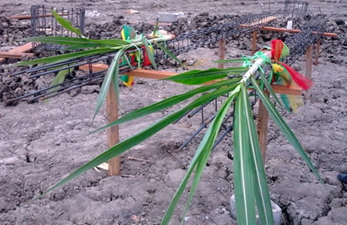
Photo Credit: thaihometown.com
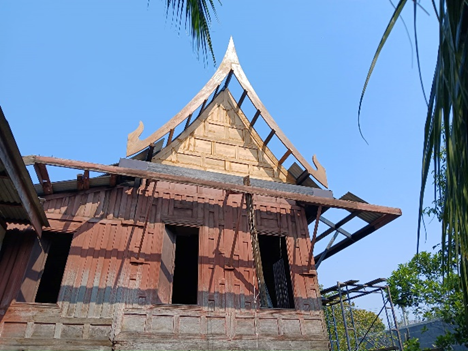
Photo Credit: Facebook Page “Made of Wood”
Respect for artisanship and local craftsmanship
Traditional Thai houses rely on skilled handcraft, especially in carved wood, joinery without nails, and decorative gables. Techniques are passed down through generations, reflecting deep respect for local knowledge and materials, not only beauty.
Ruean Thai Today: Preservation & Contemporary Revival
Rapid urbanization, changing lifestyles, and the dominance of brick, cement and metal in housing are causing many traditional wooden houses to vanish. In many places, only a few older wood houses remain, often surrounded by modern buildings and concrete.
However, some modern Thai homes and developments are re-embracing traditional design elements but adapted to today’s urban and suburban living. This trend reflects a growing interest in blending vernacular wisdom with modern needs to create houses that feel “Thai” even in contemporary settings. In addition, in an age of climate change and environmental awareness, traditional Thai architecture offers passive built-in climate adaptation, which is gaining new relevance as sustainable, resource-efficient solutions for modern homes.
Where to see traditional Thai houses today?
Jim Thompson House Museum
Jim Thompson House Museum – a cluster of six teak-wood traditional Thai houses from different regions
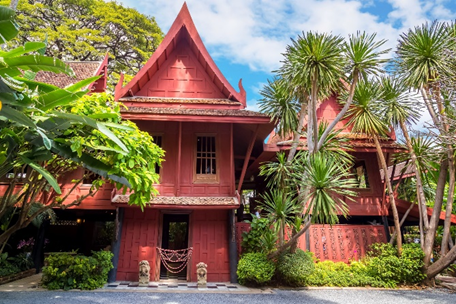
Photo Credit : viehotelbangkok.com
Nasatta Park in Ratchaburi
Nasatta Park in Ratchaburi – a knowledge park offering immersive experiences of Thai culture from traditional cuisine, festivals, history, and of course, traditional Thai houses from four regions
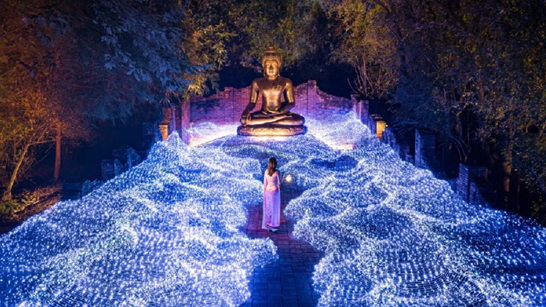
Photo Credit : ticket2attraction.com
Suan Pakkad Palace
Suan Pakkad Palace – a museum which houses several traditional Thai pavilions and domestic buildings
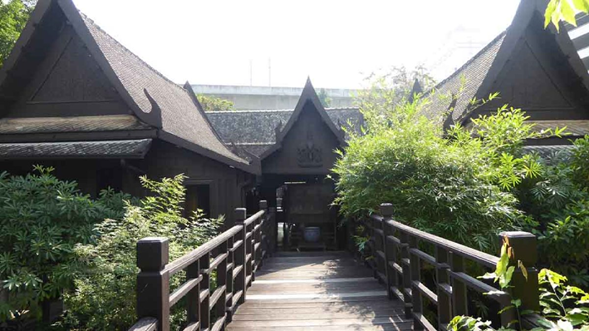
Photo Credit : touristbangkok.com
Heritage house turned modern venues
Heritage house turned modern venues – Some preserved traditional houses have found new life as cafés, guesthouses, or cultural venues with an experience of heritage architecture under modern use, helping to keep these structures alive while giving them practical roles in contemporary society. You may visit Gingerbread House Café, Na Café at Bangkok 1899, or Kessara Boutique Historic Hotel, to name a few.
Conclusion
Ruean Thai, or traditional Thai houses, are an important part of Thai heritage with beauty and uniqueness rivaling those of any other country in the world. Yet, it is far more than a physical shelter, but a living expression of Thailand’s history, climate, craftsmanship, and deeply rooted cultural values.
Understanding these houses helps both Thais and foreigners appreciate Thailand’s unique approach to blending human life with nature and community. From raised floors to open Chaan, every element is shaped by harmony with nature and communal living. Even as today’s lifestyles move away from farming toward cities filled with concrete buildings, the spirit of vernacular architecture continues through a transformation from traditional Thai houses into modern Thai-style homes, with structures still shaped by local needs, environmental conditions, available materials, and the skills of local craftsmen. This demonstrates that vernacular wisdom is not disappearing but evolving alongside Thai society, motivating many to have their own Ruean Thai.
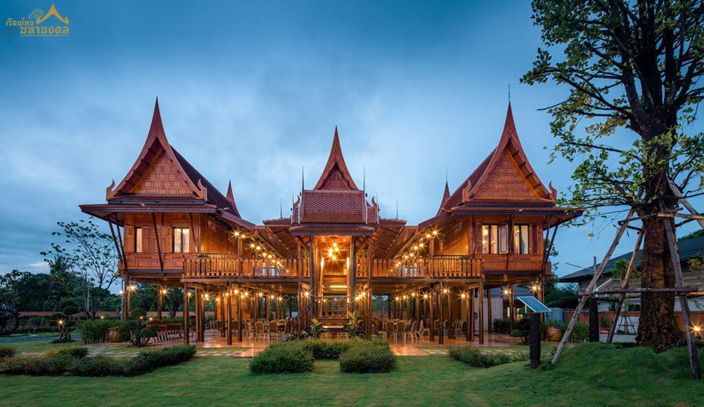
Photo Credit : mahamongkol-thaihouse.com
Thai Traditional Houses are iconic parts of Thai culture and heritage. These beautifully crafted dwellings serve not only as “time capsules” for how Thai ancestors ingeniously adapted to their environment, but also as “cultural capsules” for how values and aesthetic skills are manifested. Join us as we explore more stories of Thailand and its people, and discover the essence of Thainess together.
Sources
- https://www.baanlaesuan.com/178487/houses/vernacular_architecture/

Author: Soonyata Mianlamai
Editor: Tayud Mongkolrat
Uploaded on February 2, 2026